2014 Symphony in the Flint Hills: Photos

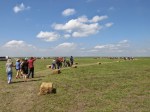
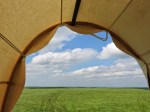
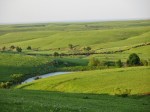
It was incredibly windy, it is Kansas after all, but with the lush green grass, it wasn’t dusty, and the 2014 Symphony in the Flint Hills was a success. The Kansas City Symphony played to 7,000 people on the Gottsch Cattle Co. Ranch near Rosalia. Here are some photos, all taken by Mark Conard.

Symphony in the Flint Hills

Today is the day for ninth annual Symphony in the Flint Hills. Held at Rosalia Ranch in Butler County this year, the Kansas City Symphony will play for 6,000 – 7,000 people amidst the idyllic setting of the Flint Hills.

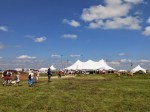
Tents at this year's Symphony in the Flint Hills

Tents at this year’s Symphony in the Flint Hills

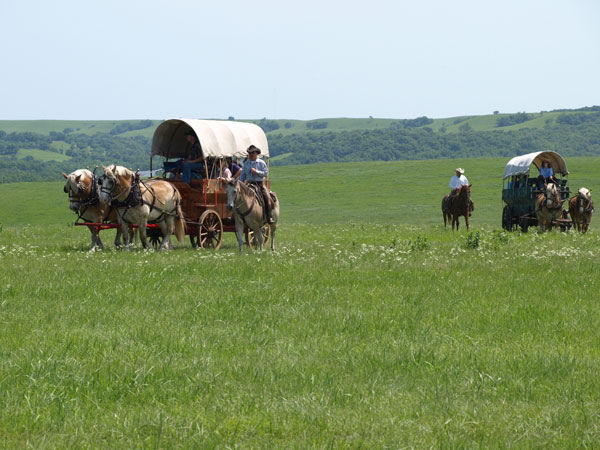
The event celebrates the heritage and ecology of this important ecosystem. Along with the headlining evening show, the event has lectures and presentations on the tallgrass prairie and Flint Hills. There are also prairie walks and covered wagon rides, and after the event, guests are invited to stay and stargaze. For kids, and kids at here, there’s the “Instrument Petting Zoo” where you can play with different instruments.

From the Symphony in the Flint Hills site on just how this unique event came to be:

In 1994, Matfield Green rancher Jane Koger celebrated her birthday by inviting the public to a “Symphony on the Prairie.” More than 3,000 people from far and wide congregated at her Homestead Ranch for a magical union between symphonic music and the prairie landscape.

Ten years after Jane Koger’s legendary birthday concert, Chase, Lyon, Morris and Wabaunsee County leaders founded Symphony in the Flint Hills, Inc. to heighten the appreciation and knowledge of the tallgrass prairie. In 2006, the organization held the first of its annual prairie concerts, a Kansas tradition that now attracts approximately 7,000 attendees from all over the world.

If you missed out this year, put the event on your calendar for next June.

5827550764_c82cfab25a_z

Photo by Kansas Tourism

Kansas’ top 10 trails: Which is your favorite?

June 7 is national trails day. In celebration and as a preview to part of the book, on schedule for publication next spring!, here are our top 10 trails in the state.

Which is your favorite Kansas trail? Let us know in the comments below!

Cedar Bluff State Park– Agave Ridge Nature Trail – Northwest

Elk City State Park – Elk River Hiking Trail – Southeast

Kanopolis Lake – Horsethief Canyon Trail – North central

Konza Prairie – Kings Creek Loop – North-Central

Shawnee Mission Park trails

Shawnee Mission Park trails

Lake Scott State Park – Hike, Bike, Bridle Trail – Southwest

Perry Lake – National Recreational Trail – Northeast

Prairie Spirit Trail and Southwind Rail Trail – Ottawa to Humboldt

Shawnee Mission Park – Orange, Violet, and Red Trails – Kansas City

Tallgrass Prairie Preserve – Scenic Overlook Trail – South-Central

Wilson Lake – Switchgrass Mountain Bike Trail – North-Central

The race is on! 2014 Bike Across Kansas has begun

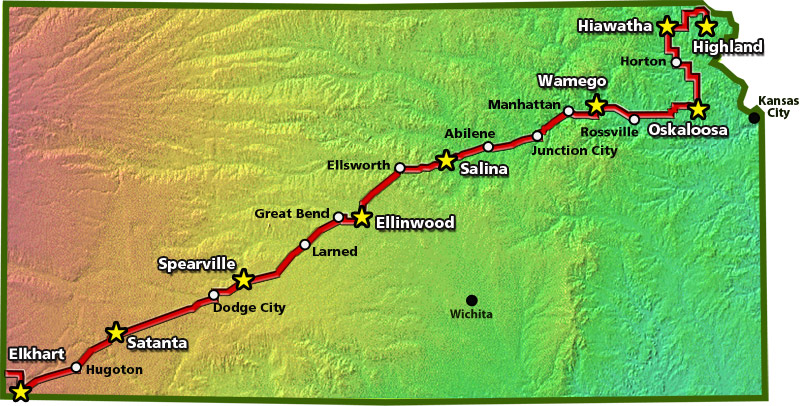
Well, not a race exactly, more a feat of dedication, strength, and spirit – The annual Bike Across Kansas or BAK event has started! This year’s 555 mile route starts from the southwest corner and heads to the northeast.

We reached out to Stefanie Weaver, the organizations executive director for her thoughts on the event.

bak2014routemap

Kansas Trail Guide: What makes BAK so special?

Weaver: BAK gives people a chance to do something unique, something that now everyone has the chance to do. It brings people of all ages (7-88) and all walks of life together with a common interest of bicycling and enjoying the beauty of the Kansas landscape, towns and people. BAK creates a community all to itself — building relationships and long lasting friendships that create what we call “BAK Moments.”

There are no barriers when bicycling through Kansas that you have on a vehicle. You are totally immersed in the environment.

Kansas Trail Guide: What can people do this year to support the tour?

Weaver: Towns provide BAK riders great support as we pass through or stay overnight. One favorite thing is people making themselves available simply for conversations–about themselves, their communities, etc. Some of the  fondest many are built with the direct involvement of townspeople. Towns often provide nightly entertainment, homemade fundraiser meals, tours of local points of interest, passes to the local pool, and many other amenities that highlight that town’s “personality” and hospitality. Riders are often as interested in sites, sounds, and towns as they are bicycling.

Kansas Trail Guide: What if people are inspired to ride next year, what should they do?

Weaver: BAK registration opens traditionally at midnight on January 29, which is Kansas Day. This year registration filled to capacity on 2 1/2 days.

Kansas Trail Guide: How do you feel the event does for the state and the community?

Weaver: A sense of community–both among its riders and within the tons we stay–is established during BAK. Whether joining up with other riders to make the bicycling trip easier, hanging out at a SAG stop support stop), visiting a local museum or historical site, coming together for the nightly meeting, pitching in to wash dishes in a local cafe, or changing a flat tire, relationship building is constantly taking place.

The towns at which we stay come together to support BAK–ensuring riders have plenty of homemade food to eat, things to do, and and sites to see. It’s the townspeople, the volunteers that make riders feel at home. For many of the small towns, it stretches them, but they never fail. We’ve been told that BAK brings an exciting people-to-people cultural exchange and that created a lasting impression.

Kansas Trail Guide: What are some misconceptions people have about Kansas that get smashed with events like the BAK?

Weaver: The first misconception is that Kansas is flat; however, people quickly realize this is a myth. They also discover hat Kansas is a state with a variety of geography. People are surprised by the beauty of the Gypsum Hills, Smoky Hills, and Flint Hills. Traveling from the southwest to northeast this year, riders will experience Kansas’ variety. Beginning with the high plains of the Cinnamon Grasslands, progressing through Arkansas River Valley, Smoky Hills, Flint Hills, and ending on the Glaciated Region, riders will experience the simple beauty of Kansas.

To all the riders and supporters in this year’s event – have fun, stay safe, and enjoy the ride!

25th anniversary celebration for The Nature Conservancy in Kansas

25th anniversary celebration for The Nature Conservancy in Kansas

This Saturday, June 7, The Nature Conservancy marks its 25th year of working in Kansas. To celebrate, they’re hosting an anniversary event at Smoky Valley Ranch.

Cretaceous Formations

Cretaceous Formations

If you’ve never been to Smoky Valley Ranch, you should check it out. Yes, it’s seemingly in the middle of nowhere in western Kansas, but it has some of the coolest geologic formations in the state – its Cretaceous formations are unexpected and impressive out on the short grass prairie.

For the anniversary event: “The event’s activities include a driving tour that will feature how the Conservancy’s long-term management makes the ranch into a model of shortgrass prairie conservation. Tour participants will also discuss how the ranch has been a site for several research projects.

Other activities include a hike that will take visitors to scenic and diverse sites on the ranch and presentations about the history of the ranch, including the role of Native Americans and bison.”

Photo by J. Michael Lockhart/USFWS

Photo by J. Michael Lockhart/USFWS

At Smoky Valley Ranch, The Nature Conservancy in Kansas was instrumental in reintroducing the endangered black footed ferret back to Kansas. The organization also helps protect and care for the Tallgrass National Prairie Preserve, one of the world’s last swathes of tallgrass prairie, and for Cheyenne Bottoms, one of the state’s and arguably the country’s most important wetlands along the Central Flyway that’s used for migratory birds.

The Nature Conservancy in Kansas also helps give information and support to landowners who want to work on conservation issues to ensure the health and beauty of the state’s natural wonders.

Kansas Travel Inspiration: Flint Hills

It’s a three-day weekend, and we’re hoping that you’re able to get out and explore. Though if you get rained in, remember that rain is good, rain gives us green vistas like the one below.

For some travel inspiration, here’s the Flint Hills.

IMG_1444

Flint Hills photo by Mark Conard

What’s so special about Kansas: Interview with Logan Mize

I’ve always taken a lot of pride in being from the state of Kansas and I think it comes across in my music.

From Clearwater, Kansas, Logan Mize is a country singer and an official Kansas Tourism Ambassador. He’s got a new album coming out, and he’s coming to Kansas for Manhattan’s annual Country Stampede from June 26 – 29. We reached out to find out what he thought was so special about Kansas, and we have his music video that celebrates just how special this state really is.

Kansas Trail Guide: Our book is all about trails in Kansas for hiking, biking, and horseback riding. Many of the trails are in state and county parks. Do you have a favorite park or favorite trail in Kansas? If so, what is it that makes it special for you?

Mize: I grew up going to Cheney and Lake Afton a lot. I have really fun memories of both places.  I’ve always thought Wilson Lake was really pretty as well.  I look forward to visiting all of them eventually.

[Our book can help you with that!]

Kansas Trail Guide: What does it mean for you to be a Kansas Tourism Ambassador?

Mize: I’ve always taken a lot of pride in being from the state of Kansas and I think it comes across in my music. It’s a huge honor to be given the title. I just want to make sure I’m going above and beyond to promote the great features the state has to offer.

Kansas Trail Guide: What are some of the biggest Kansas misconceptions you think people have?

Mize: I think it’s usually referred to as that long stretch of drive people have to cross on the way to the Rockies.  It’s important for people to know there are plenty of attractions/destinations here in Kansas that I think would surprise most people passing through.

Kansas Trail Guide: Out of staters often think of Kansas as “flyover country” – what would you say to change their minds?

Mize: I’d say to keep flying over so they don’t come crowd up all the open space that makes it feel so free Haha….I’d tell them they’re missing out on the best sunset they’ve ever seen, the best hunting trip they’ve been on, the best biking trails, small town main streets, cafés and diners, and down to earth people they’ve ever met.

Kansas Trail Guide: What’s your favorite part of playing in Kansas? Is there anything that stands out with crowds in Kansas compared to elsewhere?

Mize: Playing in Kansas is always a blast. It’s like a big reunion. Even if it’s a bunch of folks I’ve never met I can tell we get each other.  It’s a lot of fun and no ones trying to figure me out here.  I’m just one in the crowd and I like it that way.

Kansas Trail Guide: Do you have anything special planned for Country Stampede?

Mize: New album release! It’s tentatively scheduled for a July 1st release which means we’ll be selling them the last week of June exclusively at country stampede. So if you want it early that’s the only place to get it.

Kansas Trail Guide: When you think of Kansas, what’s the image that comes to mind?

Mize: I’m 6 years old in my dad’s jeep riding down a dirt road in Sumner County.  It’s evening in the summer. The wheat is a golden color and fields are scattered with rolling combines, the cottonwoods line the Ninnescah river banks, and we’re turning down a one lane dirt driveway just before crossing the Nixon bridge. We weren’t in any kind of hurry. Everyone we passed waved back at us.

A Kansas Bestiary: Book review

bestiary_cover_t180For our upcoming book, we wanted to not just give information on how to navigate the trails of Kansas, but some of the interesting pieces of natural history. In our reading and research, we came across the book A Kansas Bestiary by Jake Vail, Doug Hitt, and illustrated by Lisa Grossman.

The book was recognized as a Kansas Notable Book in 2013, and it’s a short and lovely book of fantastic facts and entertaining stories of 15 animals that make their home in Kansas with beautiful illustrations of each animal.

The bestiary is “compendium of beasts.” It’s a book style/genre that was popular in the Middle Ages and the focus was combining natural history information along with illustrations and often with a moral lesson.

The animals included in this book range from the commonplace like the grasshopper and meadowlark and bison to the more threatened, secretive, or even endangered like the black-footed ferret, prairie chicken, and badger.

The descriptions of each animal have a clear dose of scientific research and support with often fanciful and compelling writing, which makes it easy to read and unlike any other book we’ve read about Kansas’ animals. The moral lessons of bestiaries past isn’t really present like bestiaries in the past, though along with natural history, there’s often a discussion of or musings on how an animal has been represented in human history in the past and the intrinsic worth it has to its ecosystem. Here’s an example of a small part of one of the entries:

Badger  “Loose-skinned, low-slung as a surfboard, Taxidea taxus skulks the prairie waves mainly in the dark, skirting the edges of perception while looming large in the subterranean imaginations of Homo sapiens…”

If you’re looking for a uniquely Kansas book to gift to yourself or to a loved one, this should definitely be on the top of your list.

You can buy the book at a selection of local bookstores and tourist attractions around the state, or you can email: kansasbestiary [at] gmail [dot] com for information about how to pay by check or money order.

What’s so special about Kansas: Interview with William Least Heat-Moon

Whatever else prairie is—grass, sky, wind—it is most of all a paradigm of infinity, a clearing full of many things except boundaries, and its power comes from its apparent limitlessness; there is no such thing as a small prairie any more than there is a little ocean, and the consequence of both is this challenge: try to take yourself seriously out here, you bipedal plodder, you complacent cartoon.

William Least Heat-Moon, PrairyErth

We have to admit, that we have used this series on the site as an excuse and reason to reach out to some of our favorite authors. We heard back from Rolf Potts and Marci Penner, and now, we’re honored that we got some face time, or rather Facebook time, with William Least-Heat Moon.

To start with, yes, we know he lives in Missouri, but he spent a great deal of time in Kansas researching his book PrairyErth: A Deep Map, and he’s an advocate for the prairie and the small town.

He’s written extensively about America and its landscapes in books like Blue Highways: A Journey into America, where he writes of checking out the back roads of the country after his divorce and in River-Horse: The Logbook of a Boat Across America, sets off aboard a small boat named Nikawa (“river horse” in Osage) from the Atlantic at New York Harbor in hopes of entering the Pacific near Astoria, Oregon.

His work isn’t just about travel within America; his most recent book Here, There, Elsewhere: Stories from the Road is a collection of his selections of his best shorter travel stories.

His insightful, thoughtful writing paints the pictures of lives and places that may be far beyond our own experience, but he brings them close and takes us with him on his journeys. His writing is intensely good and will stay with you.

Deep in working on his own book, and not knowing us beyond our cautious request that he write the foreword for our book, he graciously answered a few questions for us.

Kansas Trail Guide: You wrote PrairyErth, an in-depth book on Chase County, Kansas, which is situated in the Flint Hills. Part of the area has been set aside as a national preserve. Why do you think that the Flint Hills ecosystem is an area worth protecting?

Heat-Moon: It’s the American uniqueness of the tallgrass prairie and its rarity today.

[Kansas Trail Guide: The tallgrass prairie is at 4% of what it once was, and one of its largest intact swathes is in the Flint Hills. Thanks to the underlying rock, it’s a landscape that is unfarmable, and so was saved from being plowed under, but there has been a switch, it seems, from seeing the land as useless to a unique ecosystem.]

Kansas Trail Guide: What do you think is the appeal of a landscape like the Flint Hills that some may think is uninteresting or uninspiring compared to mountain or beach landscapes?

Heat-Moon: The tall prairie asks people to look more closely and deeply (hence the subtitle of PRAIRYERTH–“A Deep Map.”)

Kansas Trail Guide: In our upcoming trail guidebook, we’re focusing on the trails that can be accessed on foot, on a bike, or on a horse as compared to any highways or byways, forcing people to slow down to experience the area.

What value, if any, do you see in getting off the paved sidewalks and onto trails through the woods and the prairies?

Heat-Moon: Our human origins do not lie along sidewalks and paved surfaces; rather they lie where living things arise from soil and water.

Kansas Trail Guide: Your writing has focused around traveling, often more slowly than most people travel. Do you have another big trip in the works? Or one that you’re working on writing up?

Heat-Moon: My days of writing about long travels are likely at my back now. I hope now to look more closely at what I find on the little place in the woods where I live.

[Kansas Trail Guide: We’re looking forward to reading more from him.]

Black-footed Ferret: Once dead and gone

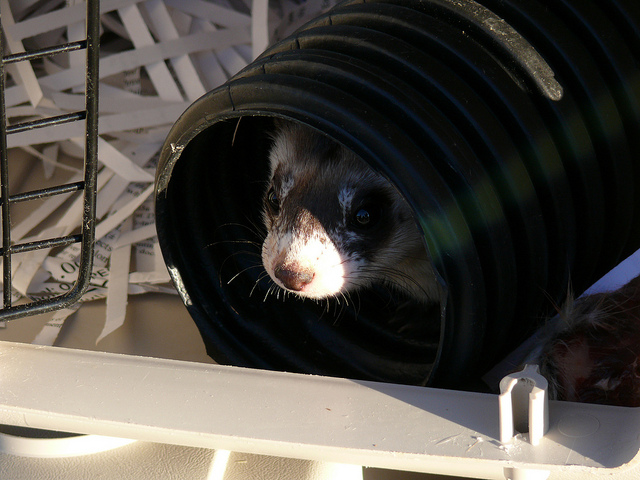
At the Nature Conservancy‘s Smoky Valley Ranch in Logan County, you can explore the remote prairie. It’s a unique spot, not just for its Cretaceous formations, but for the wildlife that live here. It’s home to one of the state’s rarest mammals: the black-footed ferret.

Photo by J. Michael Lockhart/USFWS

One of the greatest threats to a prairie dog, other than people, is the black-footed ferret, who use the prairie dog as a food source. And as prairie dogs were much more common in the prairie before the 1900s, so were black-footed ferrets. They helped keep the populations in control, and helped create balance to the prairie ecosystem.

But by 1964, with the conversion of much of the native shortgrass prairie to cropland and with the prolonged and legally required (in 1901, a law mandated townships to forcibly eradicate prairie dogs) attacks on prairie dogs, the black-footed ferret was left with little to eat, began dying out, and was placed on the federal endangered species list.

In 1979, it was declared extinct. After the discovery of a small population in 1981 in Wyoming and after years of careful monitoring and after convincing some local landowners, in 2007, ten black-footed ferrets were reintroduced to the Smoky Valley Ranch by the U.S. Fish and Wildlife Service. This rare, nocturnal mammal has made a place for itself again on the prairies of western Kansas.

It was thanks to ranchers in the county who volunteered their land as habitat for the nocturnal creatures and the Nature Conservancy land, and the released ferrets have been raising wildborn kits. And in 2008, the Fish and Wildlife Service released more ferrets in Logan County to help “jumpstart” the population.

First ferret released back into Kansas. Photo by Dan Mulhern/USFWS

First ferret released back into Kansas. Photo by Dan Mulhern/USFWS