What’s so special about Kansas: Interview with William Least Heat-Moon

Whatever else prairie is—grass, sky, wind—it is most of all a paradigm of infinity, a clearing full of many things except boundaries, and its power comes from its apparent limitlessness; there is no such thing as a small prairie any more than there is a little ocean, and the consequence of both is this challenge: try to take yourself seriously out here, you bipedal plodder, you complacent cartoon.

William Least Heat-Moon, PrairyErth

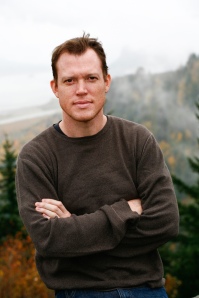
We have to admit, that we have used this series on the site as an excuse and reason to reach out to some of our favorite authors. We heard back from Rolf Potts and Marci Penner, and now, we’re honored that we got some face time, or rather Facebook time, with William Least-Heat Moon.

To start with, yes, we know he lives in Missouri, but he spent a great deal of time in Kansas researching his book PrairyErth: A Deep Map, and he’s an advocate for the prairie and the small town.

He’s written extensively about America and its landscapes in books like Blue Highways: A Journey into America, where he writes of checking out the back roads of the country after his divorce and in River-Horse: The Logbook of a Boat Across America, sets off aboard a small boat named Nikawa (“river horse” in Osage) from the Atlantic at New York Harbor in hopes of entering the Pacific near Astoria, Oregon.

His work isn’t just about travel within America; his most recent book Here, There, Elsewhere: Stories from the Road is a collection of his selections of his best shorter travel stories.

His insightful, thoughtful writing paints the pictures of lives and places that may be far beyond our own experience, but he brings them close and takes us with him on his journeys. His writing is intensely good and will stay with you.

Deep in working on his own book, and not knowing us beyond our cautious request that he write the foreword for our book, he graciously answered a few questions for us.

Kansas Trail Guide: You wrote PrairyErth, an in-depth book on Chase County, Kansas, which is situated in the Flint Hills. Part of the area has been set aside as a national preserve. Why do you think that the Flint Hills ecosystem is an area worth protecting?

Heat-Moon: It’s the American uniqueness of the tallgrass prairie and its rarity today.

[Kansas Trail Guide: The tallgrass prairie is at 4% of what it once was, and one of its largest intact swathes is in the Flint Hills. Thanks to the underlying rock, it’s a landscape that is unfarmable, and so was saved from being plowed under, but there has been a switch, it seems, from seeing the land as useless to a unique ecosystem.]

Kansas Trail Guide: What do you think is the appeal of a landscape like the Flint Hills that some may think is uninteresting or uninspiring compared to mountain or beach landscapes?

Heat-Moon: The tall prairie asks people to look more closely and deeply (hence the subtitle of PRAIRYERTH–“A Deep Map.”)

Kansas Trail Guide: In our upcoming trail guidebook, we’re focusing on the trails that can be accessed on foot, on a bike, or on a horse as compared to any highways or byways, forcing people to slow down to experience the area.

What value, if any, do you see in getting off the paved sidewalks and onto trails through the woods and the prairies?

Heat-Moon: Our human origins do not lie along sidewalks and paved surfaces; rather they lie where living things arise from soil and water.

Kansas Trail Guide: Your writing has focused around traveling, often more slowly than most people travel. Do you have another big trip in the works? Or one that you’re working on writing up?

Heat-Moon: My days of writing about long travels are likely at my back now. I hope now to look more closely at what I find on the little place in the woods where I live.

[Kansas Trail Guide: We’re looking forward to reading more from him.]

What’s so special about Kansas: Interview with Marci Penner

People are missing a lot if they don’t spend time in Kansas, especially if they like hiking, eating in locally-owned cafes, finding architectural gems, running in to grassroots art.  There are so many excellent things about Kansas but a person has to do a little exploring.

For the second in our What’s so special about Kansas series, the first interview was with Rolf Potts, we reached out to Marci Penner. Award-winner for tourism promotion and being an all around great leader for the state of Kansas, she wrote the 8 Wonders of Kansas guidebook and is updating the Kansas Guidebook for Explorers. She kindly wrote a foreword for our upcoming trail guidebook, and she’s getting geared up for this year’s Kansas Sampler Festival.

Kansas Trail Guide: You and your father founded the Kansas Sampler Foundation, which puts on the Kansas Sampler Festival, and you’re currently the director – can you give an overview of the event for those who may not have been of it before?

festivallogo2Penner: We are in our 25th year of the Kansas Sampler Festival.  It started out as a book signing party for our first Kansas Weekend Guide and turned into a full-fledged festival to provide the public a sample of what there is to see, do, hear, taste, buy, and learn in Kansas.  It was held on our farm near Inman for eight years and now the event moves around the state.

The Kansas Sampler Foundation was started in 1993 to help preserve and sustain rural culture.  We educate Kansans about Kansas, like with our guidebooks, the festival, the Kansas Explorers Club, e-blasts, and programs

WenDee LaPlant, assistant director, and I are currently going to every incorporated city in Kansas again to research for the update to Kansas Guidebook for Explorers.  It’s due out in early 2016.  It takes awhile to go to 626 towns!

The Foundation also works to network and support rural communities.  We do things like the Big Rural Brainstorm, We Kan! Conference, the PowerUp Movement, Rural Kansas: Come & Get It (getruralkansas.org) and many other things.

Kansas Trail Guide: When and where is this year’s Kansas Sampler Festival, and what can people expect if they visit?

Penner: This year’s Kansas Sampler Festival will be held in Wamego’s City Park on Saturday, May 3 (10 a.m.-5 p.m.) and Sunday, May 4 (10 a.m.-4 p.m.).  $5 adult admission, $3 for kids 7-12.  You’ll find representatives from 150 Kansas communities on the grounds to help you know about everything from trails to restaurants, historic sites to events.  Kansas musicians, historic performers, photographers, and entrepreneurs will be there along with a kangaroo, packgoats, Mammoth Donkeys, and a Kansas fish aquarium.  Come buy, sample Kansas wines and microbrews, or just enjoy the entertainment.  In one weekend you’ll get a year’s worth of day trip ideas.

Kansas Trail Guide: You’ve written some guidebooks of your own for Kansas – what place do you feel a trail guidebook would fit into the mix of information out there about Kansas?

Penner: A trail guidebook will be an awesome addition for glove compartments, coffee tables, and backpacks.  You’ve done a great job finding all the trails and going to them so you could deliver firsthand information.  I’m so excited about your book.  The diversity, quality, and even number of trails in this state are overlooked.  We appreciate you drawing attention to one of our best assets!

Kansas Trail Guide: Our book with University Press of Kansas is all about trails in Kansas for hiking, biking, and horseback riding. Many of the trails are in state and county parks. Do you have a favorite park or favorite trail in Kansas? If so, what is it that makes it special for you?

Marci Penner on the trail

Marci Penner on the trail

Penner: I really love the trails at Cross Timbers State Lake in Woodson County.  You almost feel like you are in a different state with all the rock and woods but this is Kansas, too!

Kansas Trail Guide: What are some of the biggest Kansas misconceptions you think people have?

Penner: As Jason Probst says, “Kansas is in the details.”  You have to want to get to know Kansas and when you’ve come to that point then the state becomes a huge playground with infinite nooks and crannies to explore.  Until you are willing to get to know the state there will be misconceptions between east and west, between urban and rural, between young and old.

The joy is when you toss aside expectations and judgments and just get out there to meet people for who they are and try to understand each place for what it is.

Kansas Trail Guide: Out of staters often think of Kansas as “flyover country” – what would you say to change their minds?

Penner: First we have to change the minds of Kansans.  Once we are proud of our own state then attitudes will start to change everywhere.  Guidebooks like yours and photography that is shared online are two good ways to help reset the way people see Kansas.  People are missing a lot if they don’t spend time in Kansas, especially if they like hiking, eating in locally-owned cafes, finding architectural gems, running in to grassroots art.  There are so many excellent things about Kansas but a person has to do a little exploring.

Kansas Trail Guide: Some Kansas natives think of Kansas as a place to move away from once they’re old enough or after college – what would you say to change their minds?

Penner: I don’t think it’s our job to convince them.  I think it’s our job to work daily at making Kansas a place that is vital to young people.  The first step is to enlist the young people that are here and to make sure their voice is heard in discussions about sustaining communities.  I’m all for young people going out to see the world and then if they want to come back to Kansas we’re better off with all the experience they bring with them.  There are many things we can do to make our state a great place to live for all ages.

Kansas Trail Guide: When you think of Kansas, what’s the image that comes to mind?

Penner: One of my favorite images is sitting on the porch of my barn house and watching an electrical storm sweep across the sky.  The vast horizon is the pallet for those huge lightning strikes that run across the sky.. and then it all goes pitch dark until the next one erupts.  Sometime we get lucky when a rainbow shows up the next morning. It’s all in the details.

Tallgrass Prairie Preserve

Tallgrass Prairie Preserve

The Flint Hills culture is built on prairie grasses.  Too rocky to be tilled, the rugged limestone underlying the prairie soils spared the majority of this landscape from the homesteaders plow.  While the sodbusters moved on to more amenable locations, the ranchers established a stronghold in the Flint Hills.  The expansive cattle ranches throughout the area have effectively kept large contiguous tracts of tallgrass prairie intact to this day.   While much of the Flint Hills is in private hands, there’s no better place to experience the sublime beauty of the prairie than at the Tallgrass Prairie Preserve near Strong City.  A multitude of hiking trails follow old ranch roads throughout the preserve, and the trails are open 24/7 affording opportunities for night hiking as well. Kids will enjoy hiking the Southwind Nature Trail to the Lower Fox Creek Schoolhouse, a one-room country school, built in 1882 and still standing strong.

Ranch house

Stephen Jones Ranch House Photo by Mark Conard

Lower Fox Creek School Photo by Mark Conard

Lower Fox Creek School
Photo by Mark Conard

The schoolhouse is open for tours on Saturdays from 12-4 during May-June and September-October. Hard-core hikers will want to experience the expansive backcountry trails that start behind the historic stone barn, and we recommend the Scenic Overlook Trail or Crusher Hill Loop for spectacular views of wide-open prairie. Watch your step when crossing through Windmill Pasture as bison roam freely through this area and there have been recent reports of aggressive behavior. Front-country trails winding along Lower Fox Creek are sheltered from the wind and are a great spot to view a diverse assortment of wildlife.

If you’re able to visit this weekend (April 26th) there’s a special event “Let’s Experience the Great Outdoors” sponsored in partnership with Backwoods, which includes opportunities for volunteer service, kids activities, crafts, and demonstrations.  There are great hiking opportunities as part of the event and knowledgeable park rangers will lead a family-friendly hike along the Southwind Nature Trail (12:30 – 1:30), a longer nature hike into the backcountry (1:30 – 3:30) and even a special night hike from 9:00 – 10:00 PM.

After a day on the trail, take some time to experience the ranching culture of the Flint Hills,  which is still alive and strong in the nearby towns of Strong City and Cottonwood Falls. The annual Flint Hills Rodeo in Strong City will be held from June 5-7 and is the longest-running consecutive rodeo in Kansas.  Cottonwood Falls is also home to the legendary Emma Chase Cafe and Music Hall. The food is certainly good but the main attraction each Friday night is the acoustic jam session. Check out the full schedule of performers and get ready for some authentic music from the heart of the Flint Hills. It’s an experience like no other and has been named one of the “8 Wonders of Kansas Customs” by the Kansas Sampler Foundation.  Each Friday features a different genre, ranging from acoustic country, gospel, bluegrass, and old-fashioned rock-n-roll.


Threatened and Endangered Species Series: Who Cares?

Our task must be to free ourselves, by widening our circle of compassion to embrace all living creatures, and the whole of nature…and its beauty.

Albert Einstein

As I started reading a link from a friend’s Facebook post about how there’s a bill that passed the Kansas Senate last month that would repeal the nearly 40 year old  Kansas Nongame and Endangered Species Conservation Act, I choked on my coffee. Having walked mile after mile through the parks and wilderness areas of Kansas and researching for the book, I couldn’t fathom that it would become OK to not care for the threatened and endangered species that live here.

A conservation dependent species - not currently threatened, but could be without care

A conservation dependent species – not currently threatened, but could be without care

After I recovered from my choking fit, I realized that while, yes, there are economic issues at play and that farmers, ranchers, and developers have rights, there’s really no going back after a species has gone extinct. And while this current bill has thankfully been shut down in the Senate, we need to remember to care for what wilderness and wildlife we have left.

Our tallgrass prairie is 4% of what it used to be. Our herds of bison have been reduced to dozens instead of thousands. Wetlands have been drained to make farmland or paved over for roads and cities.

Balance is key. Yes, people need to make livings. Farmers, ranchers, and developers have rights, but not that trump the rights of the wild world, which doesn’t have a voice to speak for itself, and species that, without our interference, would likely be thriving instead of threatened, like the lesser prairie chicken, the whooping crane, or the black-footed ferret. With the removal of one species from an ecosystem, a disastrous domino effect may occur, and what once was, will never be regained.

The needs and wants of today should not be considered more important than the literal survival of an entire species of creature. So at KansasTrailGuide.com, we’re going to start a series of articles on some of the threatened and endangered species that make their homes in Kansas, including information on where you can see them in the wild, why you should care about their survival, and what you can do to help ensure their safety.

Conservation is a state of harmony between men and land.

Aldo Leopold

What’s so special about Kansas: Interview with Rolf Potts

Get off the paved roads and wander.

One of my favorite pastimes is hosting friends from the East or West Coast (or overseas), driving them through the landscape, and watching them react with joy to what they’d have missed had they been in a hurry.

As someone who dabbles in travel writing, I’ve known about Rolf Potts for a long time. He grew up in Kansas, and he’s spent time traveling the world and writing about it. His work has appeared in Salon.com, The New Yorker, The Atlantic, National Geographic Traveler, Outside and more.

His books include Vagabonding: An Uncommon Guide to the Art of Long-Term World Travel and Marco Polo Didn’t Go There: Stories and Revelations from One Decade as a Postmodern Travel Writer.

He’s also been in front of the camera for National Geographic Travel and the Travel Channel, and he teaches writing for Yale University and The Paris American Academy.

I reached out to him, and I have to admit a bit of a fangirl moment (I’ve read your books! I’ve wanted to do what you do!) when he replied quickly and was psyched to help with something Kansas related.

Kansas Trail Guide: Our book with University Press of Kansas is all about trails in Kansas for hiking, biking, and horseback riding.

Many of the trails are in state and county parks. Do you have a favorite park or favorite trail in Kansas? If so, what is it that makes it special for you?

Potts: I’m a fan of Kanopolis State Park. It’s not far from Saline County, where I keep a home, and I love the craggy, Smoky Hill landscape there.

Kansas Trail Guide: You’re known for your travel writing, particularly your book Vagabonding. I remember reading it when I was in college, and I remember being inspired to travel and to “get out” of Kansas.

With your experience as a travel writer, you could settle anywhere, but you still maintain a home in Kansas, which doesn’t seem as though it would be “exotic” or interesting for someone who’s seen the world. What brings you back to the state?

Potts: I’ve always had strong affection for my home state, and some of my best memories from childhood involve driving around to little-known corners of the state with my family while my father was doing biology research.

Interestingly, travel influenced my decision to come back to Kansas. In seeing how families drew strength and meaning from one another in distant corners of the globe, I made a decision to find a place close to my family. About nine years ago, my sister and her family had moved to a rural part of north-central Kansas, and she suggested I invest in some property and make my home base near her.

Less than two miles from her place we noticed that 30 beautiful acres of grassland, complete with two houses, was for sale. I couldn’t afford it myself, so I went in on it with my parents, who had recently retired. They moved into the big new house, while I spent a year and a half renovating the doublewide as my own prairie office.

Initially I think I saw this house as a place to linger between travels, but the more I invested in fixing it up, the more I spent time there, the more it began to feel like home on an intuitive level. The experience of vagabonding is something that deepens with experience, I think, and one way to give your travels added meaning over time is to cultivate some sense of home.

Kansas Trail Guide: What are some of the biggest Kansas misconceptions you think people have?

Potts: People tend to think that it’s flat and boring, or culturally backwards. But I think this is the opinion of people who either haven’t been here, or haven’t traveled slowly enough to appreciate the subtler gifts of a place like Kansas. One of my favorite pastimes is hosting friends from the East or West Coast (or overseas), driving them through the landscape, and watching them react with joy to what they’d have missed had they been in a hurry.

Kansas Trail Guide: For someone who’s never been to Kansas, do you have any recommendations for where to go or what to see?

Potts: My advice for non-Kansans is the same as my advice for Kansans: Get off the paved roads and wander. In most any county in the state, the best way to find landscape — and a sense giddy solitude — is to just find a dirt road and drive (or bike, or walk) until you find some completely surprising moment of beauty and epiphany.

Ghost trails: 5 trails that have disappeared

Lake Atwood trail starts with such promise... Photo by Mark Conard

Lake Atwood trail starts with such promise… Photo by Mark Conard

A good guidebook should highlight the best of what’s out there.  However, it’s also important to know where not to go.  There’s nothing more disappointing than planning a trip and finding out that a trail is no longer used or is in poor condition.  We’ve done the work for you for the upcoming book, so you won’t end up on a trail that once was or isn’t anymore.

We would say rest in peace, but if we’re honest, we’d much rather these trails make a comeback with some loving care and, let’s face it, an infusion of cash.  Without further ado, here is our requiem to the “ghost trails” of Kansas:

1. Kingman State Fishing Lake / Byron Walker Wildlife Area – This hike was featured in the “Hiking Guide to Kansas” and is still listed online, and according to all descriptions seemed like it would be a great short hike.  It probably would have been a great hike. If it actually still existed.  Apparently trees fell across the trail during a large storm and it has never been cleared and rebuilt.  A few short years later there are few traces that it had ever existed.

2. Clark State Fishing Lake – Jay Wood Memorial Trail – After driving through the open croplands of western Kansas, the abrupt transition to the striking panorama of the steep canyonlands surrounding Clark State Fishing Lake is nothing short of breath-taking.  The excitement that was building to explore the  rugged terrain quickly dissipated when a park worker informed us that the trail bridge located shortly after the start of the trail had washed out and not been replaced.  The only remaining trace of the trail is a few steps in the banks leading down towards the stream where the bridge once stood.

This is what the bridge looked like before it washed out. . .  Photo by Jim Mason

This is what the bridge looked like before it washed out. . .
Photo by Jim Mason

Although there are no current plans to replace the trail, the spectacular scenery (and fishing possibilities!) makes this lake worth seeing. Just don’t expect to be able to go on the memorial trail.

3. Hayden Nature Trail at Lake Atwood – With great promise, this trail starts out wide and covered carefully in wood chips. Past a large observation tower that looks out over the currently dry lake bed, the trail hits the highway and peters out into nothing. It may have been a project started when the lake was being resealed in the mid 2000s and never finished.

4. Cimarron National Grassland – The eastern portion of the Turkey Trail – Between the Cottonwood Picnic Area and the Cimarron Campground, the trail is wide and easy south of the Cimarron River. Through stands of cottonwoods, it’s a mostly exposed trail that’s also open to ATVs along with mountain bikers and hikers. Once you get to the east side of Cimarron Campground, the trail fades. This is likely because east of the campground, the trail is off limits to ATVs. The end of the trail is one mile east of County Road 16, and since the terrain is relatively flat and treeless, you could probably make it to that end point from the campground, but it won’t be on a well-defined, easy to follow trail.

5. Honorable mention – Crawford State Fishing Lake – Drywood Creek Trail – This one is kind of there in spots, and it has enormous potential and it isn’t quite dead yet. It circumnavigates the lake, and dips in and out of the trees. Along the west side of the lake, the “trail” is the road along lake front cabins, and on the north side of the dam and on the east side of the lake, with washed out sections and fallen trees, the trail is hard to follow. At one point, I found myself trying to lift fallen trees myself to make sure I was mapping the “real” trail, but I realized that there was no way I’d want to recommend that particular route to anyone without some major cleanup.

Do you have fond memories of any of these trails? Have we gotten any of them wrong – have there been any improvements or updates to any of them? Let us know in the comments.

Flint Hills Nature Trail

Flint Hills Nature Trail

The woods are lovely, dark, and deep, But I have promises to keep, And miles to go before I sleep, And miles to go before I sleep.”  -Robert Frost

The long trail holds an allure unlike any other.  The good ones are the stuff of legend; the well-worn Appalachian Trail, rugged Continental Divide Trail, and Pacific Crest Trail are universally revered.  But the truly great long trails once cut through the endless expanse of prairie that we now call Kansas.  The names themselves are legendary; Oregon Trail, Santa Fe Trail, Chisholm Trail.  But all of these legends slowly died with the advent of the railroad.

There’s more than a bit of irony in the fact that well over a century later, the modern decline of the once wide-spread railroad has driven the establishment of the new long trails spanning the plains.  One of the best known trails in the Midwest is the acclaimed Katy Trail, which runs 225 east/west from St. Charles to Clinton, Missouri.

Kansas boasts multiple long rail-trails, including the Prairie Spirit Trail, Landon Nature Trail, Blue River Trail, and Meadowlark Trail.  However, the most ambitious rail-trails project is the Flint Hills Nature Trail.  When completed, this section of rail-trail will be the seventh longest in the nation and will stretch 117 miles from Osawatomie to Herington.  Currently, the trail is not fully open but there are many sections that are ready to ride.

Flint Hills Nature Trail

Flint Hills Nature Trail

Here’s a summary of our favorite sections that are open to explore:

Osawatomie to Ottawa (18.9 miles):  The easternmost section of the Flint Hills Nature Trail is well-maintained and easily accessible as it runs along the bluffs of the Marais De Cygne river east through Rantoul and on to the historic Old Depot Museum at Ottawa.  The depot also serves as the northern terminus for the Prairie Spirit Trail and is open for tours from March – December.

Vassar to Osage City (11.1 miles): To the west of Ottawa, the trail is intermittent with 1.2 miles open between the Old Depot Museum in Ottawa west to the Marais De Cygne River and a 2 mile finished stretch east of Pomona.  However, the longest continuous section along this part of the trail currently stretches from Vassar to Osage City.  Check out the unique assortment of merchandise at the Vassar Mercantile and enjoy the gradual downhill as you cross US-75 and continue on the trail west to Osage City.

Osage City to Council Grove (39.7 miles): From Osage City the trail runs west through Admire and Allen and enters the heart of the Flint Hills.  There are a few rough stretches but this entire section is certainly passable on foot or bike.  The section between Bushong and Council Grove is one of the most scenic and remote sections of the trail as it cuts through the rugged and vast Flint Hills landscape.

Wildflowers along the Flint Hills Nature Trail

Wildflowers along the Flint Hills Nature Trail

Before Council Grove a short side trip will take you to the Allegawaho Memorial Park just to the north of the trail.  This park is located on land that formerly served as the Kaw Indian Reservation.  The end of the trail is currently at Council Grove, once the last outpost of civilization for travelers heading west along the Santa Fe Trail.  While in Council Grove visit the Kaw Mission Historic Site and dine at the Hays House which has served fine food to weary travelers since 1857.

These sections of trail are some of our favorite, but we look forward to the completion of the trail which could occur as early as 2015.

Snow daze

With a thick blanket of white over most of the state, it may be easy to start suffering from cabin fever.  There are plenty of opportunities to get out and enjoy the snow this month, so don’t let shoveling the driveway by your only outdoor activity this winter.  Before the snow melts, make sure and take advantage of some of these great opportunities to enjoy the winter!

1. Cross-country ski at Clinton Lake

Located along the North Shore of Clinton Lake State Park, the trailhead starts near the park office and there are around 5-miles of cross-country ski trails through the park. With the bare trees and the blanket of white, you can more easily spot wildlife.  The best (and only) designated cross-country ski trail in the state!

2. Sled at Shawnee Mission Park

Cross country skis. Photo by Jeremy Bronson

Cross country skis. Photo by Jeremy Bronson

During the summer, the numerous trails at Shawnee Mission Park are frequented by singletrack enthusiasts and trail-runners.

During the winter, there is more solitude and with a deep snow there are great opportunities for sledding along the steep hills (just watch out for trees!).

Another top sledding location is Indian Rock Park in Salina.  The 35-acre park is centered around a high steep hill and when the snow flies, the parks department will close the gates and turn the long steep driveway leading to the top into a massive sledding hill.  The downhill run is popular, fast, and free of obstacles.  Personal experience and a broken sled leads to the recommendation to not venture off onto any insanely steep, tree-ridden, but oh-so tempting side trails.

3. Go ice-fishing at Kanopolis State Park

The bonus of sub-zero temperatures is that the ice will thicken on many state fishing lakes and reservoirs.  Venture out with caution and make sure to drill to check the depth of the ice before getting started.

4. Ice skate outdoors at City Park in Manhattan

With the winter Olympics underway, take your best shot at a triple lutz (or just enjoy gliding around the unique outdoor rink).  Access to the rink costs $3 per skater and skates can be rented for the same price.  Open through February 28th.

Elk River Trail: saving the best for last

In what will likely be the last hiking day for 2013, I decided to hike the Elk River Trail near Independence earlier this week.  This trail is consistently ranked among the top trails in the state and so after hiking my way across the trails of Kansas for the past year I wanted to see if it lived up to the high expectations.

Venerable patriarchI was accompanied by the venerable patriarch of the family; official photographer, reliable shuttle driver, and all around great trail companion.

Luckily, we caught a break with the weather and enjoyed a balmy December day which made for perfect hiking conditions.  Actually, some of my best hiking days have been during warm days in the winter. No ticks, no crowds, no poison ivy.  Not a bad combination for a hike.

I started at the east end of the trail around 11:00 and set off in high spirits.  The trail did not waste any time getting to some amazing scenery and rugged ascents.  The rock bluffs are truly like nothing else in Kansas and within the first 1/2 mile the trail was going right through the midst of these spectacular formations.  Rock bluffs along trailAfter winding for several miles along the rocks outcropping along the edge of the bluff, I stopped for a power lunch (think: PBJ, trail mix, and Clif bar) before continuing on down the trail.  The entire route had a nice wilderness feel, there were no intersecting roads, no views of civilization, and we didn’t see another hiker the entire trip.

Continuing along the top of the bluffs, the trail soon began to switchback across a series of ravines, each complete with small stream crossings that could be negotiated by using the native rock as stepping stones.  Around 9.5 miles and 4 hours later, the trail crossed an old paved park road through the former Oak Ridge Public Use Area; I thought about pushing to the end of the trail, but decided that this location would make a good spot to stop for the day and break the hike into two sections.  Despite what Google Maps may show, this is really the only spot on the trail that is intersected by a passable road, and so it does make a good location to resupply, camp, or catch a ride back to the trailhead.

Starting the next morning from this point, my legs were protesting a bit from the 9.5 miles logged the day before.  I suppose thisHiked our soles off isn’t unreasonable, since I had spent most of the last month at my desk job and the trail is technically designated as “rugged”.  Despite the designation, I thought that there wasn’t any single section that is unreasonably “rugged”, but the rock trail does require a cumulative effect to repeatedly ascend and descend through the limestone formations and across the steep ravines. However, before writing the trail off as less than rugged, in all fairness I should note that it did produce several pairs of sore feet and lay claim to one boot sole (see picture).

IMG_5223After a solo hike on the first day, I was joined on the second part of the hike by my Dad (aka: venerable patriarch and designated photographer), which was fortunate since we soon reached one of the most scenic spots on the hike.  Before reaching mile 10, there was a stream running slightly off the trail, in which a stately sycamore grew up out of the banks of the stream under a rock ledge.  Although some guidebooks would have you believe that the western part of the trail is less scenic, the section between miles 10-13 was actually my favorite part of the hike.  This section parallels the Elk River as it flows towards the reservoir and there are several overlook points and an area where the trail passes through rivulets of trickling water cascading over a wide broad-brimmed rock ledge.  Over the last several miles, the trail parted ways with the Elk River and crossed through oak and cedar woodlands before reaching the western trailhead near US-160.Hiking on Elk River Trail

All told, I tend to agree with the outstanding reviews about this trail.   It’s one of the few trails in the state that could provide a legitimate backpacking experience, the rocks are flat-out amazing, and the views are sublime.

In fact it just might be the best trail in Kansas.

Probably.

Well, let’s just say you’ll want to read the book to find out.

Happy trails!