25th anniversary celebration for The Nature Conservancy in Kansas

25th anniversary celebration for The Nature Conservancy in Kansas

This Saturday, June 7, The Nature Conservancy marks its 25th year of working in Kansas. To celebrate, they’re hosting an anniversary event at Smoky Valley Ranch.

Cretaceous Formations

Cretaceous Formations

If you’ve never been to Smoky Valley Ranch, you should check it out. Yes, it’s seemingly in the middle of nowhere in western Kansas, but it has some of the coolest geologic formations in the state – its Cretaceous formations are unexpected and impressive out on the short grass prairie.

For the anniversary event: “The event’s activities include a driving tour that will feature how the Conservancy’s long-term management makes the ranch into a model of shortgrass prairie conservation. Tour participants will also discuss how the ranch has been a site for several research projects.

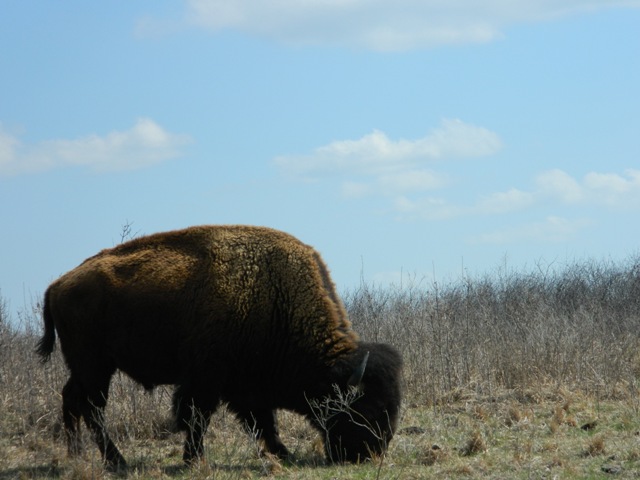
Other activities include a hike that will take visitors to scenic and diverse sites on the ranch and presentations about the history of the ranch, including the role of Native Americans and bison.”

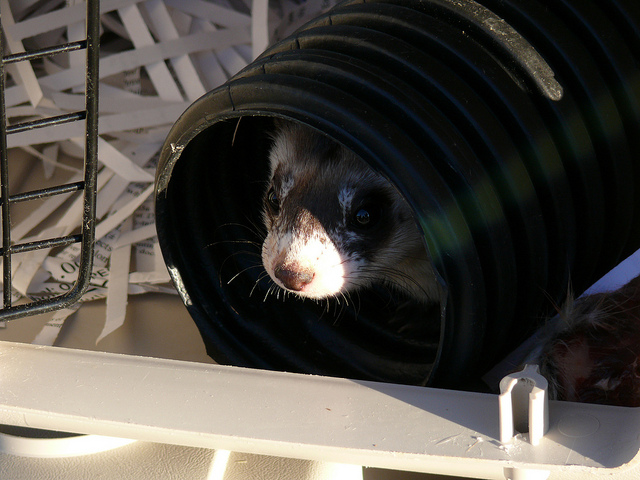
Photo by J. Michael Lockhart/USFWS

Photo by J. Michael Lockhart/USFWS

At Smoky Valley Ranch, The Nature Conservancy in Kansas was instrumental in reintroducing the endangered black footed ferret back to Kansas. The organization also helps protect and care for the Tallgrass National Prairie Preserve, one of the world’s last swathes of tallgrass prairie, and for Cheyenne Bottoms, one of the state’s and arguably the country’s most important wetlands along the Central Flyway that’s used for migratory birds.

The Nature Conservancy in Kansas also helps give information and support to landowners who want to work on conservation issues to ensure the health and beauty of the state’s natural wonders.

Kansas Travel Inspiration: Flint Hills

It’s a three-day weekend, and we’re hoping that you’re able to get out and explore. Though if you get rained in, remember that rain is good, rain gives us green vistas like the one below.

For some travel inspiration, here’s the Flint Hills.

IMG_1444

Flint Hills photo by Mark Conard

What’s so special about Kansas: Interview with Logan Mize

I’ve always taken a lot of pride in being from the state of Kansas and I think it comes across in my music.

From Clearwater, Kansas, Logan Mize is a country singer and an official Kansas Tourism Ambassador. He’s got a new album coming out, and he’s coming to Kansas for Manhattan’s annual Country Stampede from June 26 – 29. We reached out to find out what he thought was so special about Kansas, and we have his music video that celebrates just how special this state really is.

Kansas Trail Guide: Our book is all about trails in Kansas for hiking, biking, and horseback riding. Many of the trails are in state and county parks. Do you have a favorite park or favorite trail in Kansas? If so, what is it that makes it special for you?

Mize: I grew up going to Cheney and Lake Afton a lot. I have really fun memories of both places.  I’ve always thought Wilson Lake was really pretty as well.  I look forward to visiting all of them eventually.

[Our book can help you with that!]

Kansas Trail Guide: What does it mean for you to be a Kansas Tourism Ambassador?

Mize: I’ve always taken a lot of pride in being from the state of Kansas and I think it comes across in my music. It’s a huge honor to be given the title. I just want to make sure I’m going above and beyond to promote the great features the state has to offer.

Kansas Trail Guide: What are some of the biggest Kansas misconceptions you think people have?

Mize: I think it’s usually referred to as that long stretch of drive people have to cross on the way to the Rockies.  It’s important for people to know there are plenty of attractions/destinations here in Kansas that I think would surprise most people passing through.

Kansas Trail Guide: Out of staters often think of Kansas as “flyover country” – what would you say to change their minds?

Mize: I’d say to keep flying over so they don’t come crowd up all the open space that makes it feel so free Haha….I’d tell them they’re missing out on the best sunset they’ve ever seen, the best hunting trip they’ve been on, the best biking trails, small town main streets, cafés and diners, and down to earth people they’ve ever met.

Kansas Trail Guide: What’s your favorite part of playing in Kansas? Is there anything that stands out with crowds in Kansas compared to elsewhere?

Mize: Playing in Kansas is always a blast. It’s like a big reunion. Even if it’s a bunch of folks I’ve never met I can tell we get each other.  It’s a lot of fun and no ones trying to figure me out here.  I’m just one in the crowd and I like it that way.

Kansas Trail Guide: Do you have anything special planned for Country Stampede?

Mize: New album release! It’s tentatively scheduled for a July 1st release which means we’ll be selling them the last week of June exclusively at country stampede. So if you want it early that’s the only place to get it.

Kansas Trail Guide: When you think of Kansas, what’s the image that comes to mind?

Mize: I’m 6 years old in my dad’s jeep riding down a dirt road in Sumner County.  It’s evening in the summer. The wheat is a golden color and fields are scattered with rolling combines, the cottonwoods line the Ninnescah river banks, and we’re turning down a one lane dirt driveway just before crossing the Nixon bridge. We weren’t in any kind of hurry. Everyone we passed waved back at us.

A Kansas Bestiary: Book review

bestiary_cover_t180For our upcoming book, we wanted to not just give information on how to navigate the trails of Kansas, but some of the interesting pieces of natural history. In our reading and research, we came across the book A Kansas Bestiary by Jake Vail, Doug Hitt, and illustrated by Lisa Grossman.

The book was recognized as a Kansas Notable Book in 2013, and it’s a short and lovely book of fantastic facts and entertaining stories of 15 animals that make their home in Kansas with beautiful illustrations of each animal.

The bestiary is “compendium of beasts.” It’s a book style/genre that was popular in the Middle Ages and the focus was combining natural history information along with illustrations and often with a moral lesson.

The animals included in this book range from the commonplace like the grasshopper and meadowlark and bison to the more threatened, secretive, or even endangered like the black-footed ferret, prairie chicken, and badger.

The descriptions of each animal have a clear dose of scientific research and support with often fanciful and compelling writing, which makes it easy to read and unlike any other book we’ve read about Kansas’ animals. The moral lessons of bestiaries past isn’t really present like bestiaries in the past, though along with natural history, there’s often a discussion of or musings on how an animal has been represented in human history in the past and the intrinsic worth it has to its ecosystem. Here’s an example of a small part of one of the entries:

Badger  “Loose-skinned, low-slung as a surfboard, Taxidea taxus skulks the prairie waves mainly in the dark, skirting the edges of perception while looming large in the subterranean imaginations of Homo sapiens…”

If you’re looking for a uniquely Kansas book to gift to yourself or to a loved one, this should definitely be on the top of your list.

You can buy the book at a selection of local bookstores and tourist attractions around the state, or you can email: kansasbestiary [at] gmail [dot] com for information about how to pay by check or money order.

What’s so special about Kansas: Interview with William Least Heat-Moon

Whatever else prairie is—grass, sky, wind—it is most of all a paradigm of infinity, a clearing full of many things except boundaries, and its power comes from its apparent limitlessness; there is no such thing as a small prairie any more than there is a little ocean, and the consequence of both is this challenge: try to take yourself seriously out here, you bipedal plodder, you complacent cartoon.

William Least Heat-Moon, PrairyErth

We have to admit, that we have used this series on the site as an excuse and reason to reach out to some of our favorite authors. We heard back from Rolf Potts and Marci Penner, and now, we’re honored that we got some face time, or rather Facebook time, with William Least-Heat Moon.

To start with, yes, we know he lives in Missouri, but he spent a great deal of time in Kansas researching his book PrairyErth: A Deep Map, and he’s an advocate for the prairie and the small town.

He’s written extensively about America and its landscapes in books like Blue Highways: A Journey into America, where he writes of checking out the back roads of the country after his divorce and in River-Horse: The Logbook of a Boat Across America, sets off aboard a small boat named Nikawa (“river horse” in Osage) from the Atlantic at New York Harbor in hopes of entering the Pacific near Astoria, Oregon.

His work isn’t just about travel within America; his most recent book Here, There, Elsewhere: Stories from the Road is a collection of his selections of his best shorter travel stories.

His insightful, thoughtful writing paints the pictures of lives and places that may be far beyond our own experience, but he brings them close and takes us with him on his journeys. His writing is intensely good and will stay with you.

Deep in working on his own book, and not knowing us beyond our cautious request that he write the foreword for our book, he graciously answered a few questions for us.

Kansas Trail Guide: You wrote PrairyErth, an in-depth book on Chase County, Kansas, which is situated in the Flint Hills. Part of the area has been set aside as a national preserve. Why do you think that the Flint Hills ecosystem is an area worth protecting?

Heat-Moon: It’s the American uniqueness of the tallgrass prairie and its rarity today.

[Kansas Trail Guide: The tallgrass prairie is at 4% of what it once was, and one of its largest intact swathes is in the Flint Hills. Thanks to the underlying rock, it’s a landscape that is unfarmable, and so was saved from being plowed under, but there has been a switch, it seems, from seeing the land as useless to a unique ecosystem.]

Kansas Trail Guide: What do you think is the appeal of a landscape like the Flint Hills that some may think is uninteresting or uninspiring compared to mountain or beach landscapes?

Heat-Moon: The tall prairie asks people to look more closely and deeply (hence the subtitle of PRAIRYERTH–“A Deep Map.”)

Kansas Trail Guide: In our upcoming trail guidebook, we’re focusing on the trails that can be accessed on foot, on a bike, or on a horse as compared to any highways or byways, forcing people to slow down to experience the area.

What value, if any, do you see in getting off the paved sidewalks and onto trails through the woods and the prairies?

Heat-Moon: Our human origins do not lie along sidewalks and paved surfaces; rather they lie where living things arise from soil and water.

Kansas Trail Guide: Your writing has focused around traveling, often more slowly than most people travel. Do you have another big trip in the works? Or one that you’re working on writing up?

Heat-Moon: My days of writing about long travels are likely at my back now. I hope now to look more closely at what I find on the little place in the woods where I live.

[Kansas Trail Guide: We’re looking forward to reading more from him.]

Black-footed Ferret: Once dead and gone

At the Nature Conservancy‘s Smoky Valley Ranch in Logan County, you can explore the remote prairie. It’s a unique spot, not just for its Cretaceous formations, but for the wildlife that live here. It’s home to one of the state’s rarest mammals: the black-footed ferret.

Photo by J. Michael Lockhart/USFWS

One of the greatest threats to a prairie dog, other than people, is the black-footed ferret, who use the prairie dog as a food source. And as prairie dogs were much more common in the prairie before the 1900s, so were black-footed ferrets. They helped keep the populations in control, and helped create balance to the prairie ecosystem.

But by 1964, with the conversion of much of the native shortgrass prairie to cropland and with the prolonged and legally required (in 1901, a law mandated townships to forcibly eradicate prairie dogs) attacks on prairie dogs, the black-footed ferret was left with little to eat, began dying out, and was placed on the federal endangered species list.

In 1979, it was declared extinct. After the discovery of a small population in 1981 in Wyoming and after years of careful monitoring and after convincing some local landowners, in 2007, ten black-footed ferrets were reintroduced to the Smoky Valley Ranch by the U.S. Fish and Wildlife Service. This rare, nocturnal mammal has made a place for itself again on the prairies of western Kansas.

It was thanks to ranchers in the county who volunteered their land as habitat for the nocturnal creatures and the Nature Conservancy land, and the released ferrets have been raising wildborn kits. And in 2008, the Fish and Wildlife Service released more ferrets in Logan County to help “jumpstart” the population.

First ferret released back into Kansas. Photo by Dan Mulhern/USFWS

First ferret released back into Kansas. Photo by Dan Mulhern/USFWS


What’s so special about Kansas: Interview with Marci Penner

People are missing a lot if they don’t spend time in Kansas, especially if they like hiking, eating in locally-owned cafes, finding architectural gems, running in to grassroots art.  There are so many excellent things about Kansas but a person has to do a little exploring.

For the second in our What’s so special about Kansas series, the first interview was with Rolf Potts, we reached out to Marci Penner. Award-winner for tourism promotion and being an all around great leader for the state of Kansas, she wrote the 8 Wonders of Kansas guidebook and is updating the Kansas Guidebook for Explorers. She kindly wrote a foreword for our upcoming trail guidebook, and she’s getting geared up for this year’s Kansas Sampler Festival.

Kansas Trail Guide: You and your father founded the Kansas Sampler Foundation, which puts on the Kansas Sampler Festival, and you’re currently the director – can you give an overview of the event for those who may not have been of it before?

festivallogo2Penner: We are in our 25th year of the Kansas Sampler Festival.  It started out as a book signing party for our first Kansas Weekend Guide and turned into a full-fledged festival to provide the public a sample of what there is to see, do, hear, taste, buy, and learn in Kansas.  It was held on our farm near Inman for eight years and now the event moves around the state.

The Kansas Sampler Foundation was started in 1993 to help preserve and sustain rural culture.  We educate Kansans about Kansas, like with our guidebooks, the festival, the Kansas Explorers Club, e-blasts, and programs

WenDee LaPlant, assistant director, and I are currently going to every incorporated city in Kansas again to research for the update to Kansas Guidebook for Explorers.  It’s due out in early 2016.  It takes awhile to go to 626 towns!

The Foundation also works to network and support rural communities.  We do things like the Big Rural Brainstorm, We Kan! Conference, the PowerUp Movement, Rural Kansas: Come & Get It (getruralkansas.org) and many other things.

Kansas Trail Guide: When and where is this year’s Kansas Sampler Festival, and what can people expect if they visit?

Penner: This year’s Kansas Sampler Festival will be held in Wamego’s City Park on Saturday, May 3 (10 a.m.-5 p.m.) and Sunday, May 4 (10 a.m.-4 p.m.).  $5 adult admission, $3 for kids 7-12.  You’ll find representatives from 150 Kansas communities on the grounds to help you know about everything from trails to restaurants, historic sites to events.  Kansas musicians, historic performers, photographers, and entrepreneurs will be there along with a kangaroo, packgoats, Mammoth Donkeys, and a Kansas fish aquarium.  Come buy, sample Kansas wines and microbrews, or just enjoy the entertainment.  In one weekend you’ll get a year’s worth of day trip ideas.

Kansas Trail Guide: You’ve written some guidebooks of your own for Kansas – what place do you feel a trail guidebook would fit into the mix of information out there about Kansas?

Penner: A trail guidebook will be an awesome addition for glove compartments, coffee tables, and backpacks.  You’ve done a great job finding all the trails and going to them so you could deliver firsthand information.  I’m so excited about your book.  The diversity, quality, and even number of trails in this state are overlooked.  We appreciate you drawing attention to one of our best assets!

Kansas Trail Guide: Our book with University Press of Kansas is all about trails in Kansas for hiking, biking, and horseback riding. Many of the trails are in state and county parks. Do you have a favorite park or favorite trail in Kansas? If so, what is it that makes it special for you?

Marci Penner on the trail

Marci Penner on the trail

Penner: I really love the trails at Cross Timbers State Lake in Woodson County.  You almost feel like you are in a different state with all the rock and woods but this is Kansas, too!

Kansas Trail Guide: What are some of the biggest Kansas misconceptions you think people have?

Penner: As Jason Probst says, “Kansas is in the details.”  You have to want to get to know Kansas and when you’ve come to that point then the state becomes a huge playground with infinite nooks and crannies to explore.  Until you are willing to get to know the state there will be misconceptions between east and west, between urban and rural, between young and old.

The joy is when you toss aside expectations and judgments and just get out there to meet people for who they are and try to understand each place for what it is.

Kansas Trail Guide: Out of staters often think of Kansas as “flyover country” – what would you say to change their minds?

Penner: First we have to change the minds of Kansans.  Once we are proud of our own state then attitudes will start to change everywhere.  Guidebooks like yours and photography that is shared online are two good ways to help reset the way people see Kansas.  People are missing a lot if they don’t spend time in Kansas, especially if they like hiking, eating in locally-owned cafes, finding architectural gems, running in to grassroots art.  There are so many excellent things about Kansas but a person has to do a little exploring.

Kansas Trail Guide: Some Kansas natives think of Kansas as a place to move away from once they’re old enough or after college – what would you say to change their minds?

Penner: I don’t think it’s our job to convince them.  I think it’s our job to work daily at making Kansas a place that is vital to young people.  The first step is to enlist the young people that are here and to make sure their voice is heard in discussions about sustaining communities.  I’m all for young people going out to see the world and then if they want to come back to Kansas we’re better off with all the experience they bring with them.  There are many things we can do to make our state a great place to live for all ages.

Kansas Trail Guide: When you think of Kansas, what’s the image that comes to mind?

Penner: One of my favorite images is sitting on the porch of my barn house and watching an electrical storm sweep across the sky.  The vast horizon is the pallet for those huge lightning strikes that run across the sky.. and then it all goes pitch dark until the next one erupts.  Sometime we get lucky when a rainbow shows up the next morning. It’s all in the details.

Tallgrass Prairie Preserve

Tallgrass Prairie Preserve

The Flint Hills culture is built on prairie grasses.  Too rocky to be tilled, the rugged limestone underlying the prairie soils spared the majority of this landscape from the homesteaders plow.  While the sodbusters moved on to more amenable locations, the ranchers established a stronghold in the Flint Hills.  The expansive cattle ranches throughout the area have effectively kept large contiguous tracts of tallgrass prairie intact to this day.   While much of the Flint Hills is in private hands, there’s no better place to experience the sublime beauty of the prairie than at the Tallgrass Prairie Preserve near Strong City.  A multitude of hiking trails follow old ranch roads throughout the preserve, and the trails are open 24/7 affording opportunities for night hiking as well. Kids will enjoy hiking the Southwind Nature Trail to the Lower Fox Creek Schoolhouse, a one-room country school, built in 1882 and still standing strong.

Ranch house

Stephen Jones Ranch House Photo by Mark Conard

Lower Fox Creek School Photo by Mark Conard

Lower Fox Creek School
Photo by Mark Conard

The schoolhouse is open for tours on Saturdays from 12-4 during May-June and September-October. Hard-core hikers will want to experience the expansive backcountry trails that start behind the historic stone barn, and we recommend the Scenic Overlook Trail or Crusher Hill Loop for spectacular views of wide-open prairie. Watch your step when crossing through Windmill Pasture as bison roam freely through this area and there have been recent reports of aggressive behavior. Front-country trails winding along Lower Fox Creek are sheltered from the wind and are a great spot to view a diverse assortment of wildlife.

If you’re able to visit this weekend (April 26th) there’s a special event “Let’s Experience the Great Outdoors” sponsored in partnership with Backwoods, which includes opportunities for volunteer service, kids activities, crafts, and demonstrations.  There are great hiking opportunities as part of the event and knowledgeable park rangers will lead a family-friendly hike along the Southwind Nature Trail (12:30 – 1:30), a longer nature hike into the backcountry (1:30 – 3:30) and even a special night hike from 9:00 – 10:00 PM.

After a day on the trail, take some time to experience the ranching culture of the Flint Hills,  which is still alive and strong in the nearby towns of Strong City and Cottonwood Falls. The annual Flint Hills Rodeo in Strong City will be held from June 5-7 and is the longest-running consecutive rodeo in Kansas.  Cottonwood Falls is also home to the legendary Emma Chase Cafe and Music Hall. The food is certainly good but the main attraction each Friday night is the acoustic jam session. Check out the full schedule of performers and get ready for some authentic music from the heart of the Flint Hills. It’s an experience like no other and has been named one of the “8 Wonders of Kansas Customs” by the Kansas Sampler Foundation.  Each Friday features a different genre, ranging from acoustic country, gospel, bluegrass, and old-fashioned rock-n-roll.


60th Anniversary of Brown v Board of Education

“The story of Brown v. Board of Education, which ended legal segregation in public schools, is one of hope and courage.”

2014 marks the 60th year since the monumental case – Brown v Board of Education. The United States Supreme Court ruled that it was unconstitutional for states to have schools segregated by race.

It started in Topeka, Kansas in 1951 when 13 parents sued the Topeka Board of Education, calling for the desegregation of the schools. Led by Oliver Brown, whose daughter had to ride the bus to the closest school for African-Americans, because the closest school, seven blocks away, was reserved only for whites. The District Court ruled in favor of the Board of Education, but eventually in 1954, combined with other cases around the same issue, the Supreme Court ruled that even if segregated schools were “equal,” it was unconstitutional to separate them. So this landmark case that changed history had its roots in Kansas.BrownBldgWEB

You can visit the Brown v Board of Education site at 1515 SE Monroe Street, Topeka, KS, 66612.

This national historic site is free to visit, and it is in the location of the former all black Monroe school. Inside is a series of exhibits on the history of racism, segregation, education, and justice in the state and the country.

Outside, you can play on the historic playground, have lunch on the picnic tables, or even set out on the Landon Nature Trail, which starts in the parking lot, and which is a featured trail in our upcoming book.

In honor of the 60th anniversary, there are several events coming up that you can take part in. The first one is this Saturday from 10am to 1pm. It is a free living history walk. Every 30 minutes from the Historic Ritchie House to the Brown v Board of Education historical site. Along the way will be living history reenactors who will tell stories of life in Kansas from the 1850s through the 1950s.

More events include a free block party on May 2, a free screening of the film Freedom Riders on May 8, and a Twitter reenactment on May 17 and May 18. Find out more here.

Threatened and Endangered Species Series: Who Cares?

Our task must be to free ourselves, by widening our circle of compassion to embrace all living creatures, and the whole of nature…and its beauty.

Albert Einstein

As I started reading a link from a friend’s Facebook post about how there’s a bill that passed the Kansas Senate last month that would repeal the nearly 40 year old  Kansas Nongame and Endangered Species Conservation Act, I choked on my coffee. Having walked mile after mile through the parks and wilderness areas of Kansas and researching for the book, I couldn’t fathom that it would become OK to not care for the threatened and endangered species that live here.

A conservation dependent species - not currently threatened, but could be without care

A conservation dependent species – not currently threatened, but could be without care

After I recovered from my choking fit, I realized that while, yes, there are economic issues at play and that farmers, ranchers, and developers have rights, there’s really no going back after a species has gone extinct. And while this current bill has thankfully been shut down in the Senate, we need to remember to care for what wilderness and wildlife we have left.

Our tallgrass prairie is 4% of what it used to be. Our herds of bison have been reduced to dozens instead of thousands. Wetlands have been drained to make farmland or paved over for roads and cities.

Balance is key. Yes, people need to make livings. Farmers, ranchers, and developers have rights, but not that trump the rights of the wild world, which doesn’t have a voice to speak for itself, and species that, without our interference, would likely be thriving instead of threatened, like the lesser prairie chicken, the whooping crane, or the black-footed ferret. With the removal of one species from an ecosystem, a disastrous domino effect may occur, and what once was, will never be regained.

The needs and wants of today should not be considered more important than the literal survival of an entire species of creature. So at KansasTrailGuide.com, we’re going to start a series of articles on some of the threatened and endangered species that make their homes in Kansas, including information on where you can see them in the wild, why you should care about their survival, and what you can do to help ensure their safety.

Conservation is a state of harmony between men and land.

Aldo Leopold