The answer is…

Prairie Spirit Trail

This mural is DSC05838near the Old Depot Museum in Ottawa, which is the northern trailhead for the Prairie Spirit Trail. It runs for 50 miles from Ottawa to Iola where it links with the Southwind Rail Trail for another 6 miles or so from Iola to Humboldt.

For those who voted for the Flint Hills Nature Trail, well, I guess that could be argued as the right answer as well. The still in progress Flint Hills Nature Trail runs east – west, and it passes through Ottawa, though its route doesn’t take you past this trail mural in Ottawa.

The Prairie Spirit Trail is completely finished and in good condition, with an easy grade and wide path perfect for cyclists, equestrians, or runners, and after heading through Ottawa, the trail takes you through the Flint Hills. If you’re on the trail in the morning or evening, you’ll be under shade, and there are bathrooms and trail stops along the way as you head through or past the towns of Princeton, Richmond, Garnett, Welda, Colony, Carlyle, Iola, Bassett, and Humboldt.

If you go:

Daily passes are $3.50 and can be purchased in at self-pay stations at the Ottawa, Princeton, Richmond, Garnett, Welda, Carlyle, and Iola trailheads. Annual-use permits are $12.50 and can be purchased in Garnett and Ottawa.

REI and Dinosaurs: Prairiefire opens in Overland Park

Overland Park is now home to Kansas’ first REI store in its new $427 million development Prairiefire. Opening weekend was the first week of October, and you should stop by for a visit!

While I’m a fan of independently owned, smaller stores, REI, though it’s a big company, has to be one of my favorite stores in terms of quality hiking gear, in large part because of their return policy.

If you use the item, and it doesn’t work out for you (shoes give you blisters, shirt shrinks in the wash), they will take it back within a year of your purchase. So instead of having to hope for the best in terms of your gear working they way you want it to, you’ll always know you can go back and try again. They also sell Garmin devices, including the Oregon 650t, which we’ve tested and love.

Activities coming up with REI that will get you out exploring the Kansas City area (which, yes, does include Kansas City, Missouri, though our book will just focus on the Kansas side of the city).

And coming in May 2014 to Prairiefire will be a natural history museum called The Museum of Prairiefire. It ties in perfectly with the idea of our book – along with mapping out the trails, we’re going to be including some of the natural history of the areas, so you’ll have some context to where you’re exploring. And this museum is going to be a pretty big deal. It’s a partnership with the American Museum of Natural History in New York City.

For a sneak peek at part of the exhibits, there’s the World’s Largest Dinosaurs temporary exhibit that opened the first week of October 2013.

Featuring a life-sized, detailed model of a 60-foot-long Mamenchisaurus, the exhibit will run through the beginning of January.

Ticket cost: Adults: $10; children 12 and under: $5; Museum of Prairiefire Members: free.

If you go:
Prairiefire at Lionsgate
5750 W 137th Street, Overland Park, Kansas 66223
The center is between 135th Street and 137th Street  between Nall Avenue and Lamar Avenue.

Staying the night in Overland Park? We’d recommend the DoubleTree by Hilton.

Kansas trails you can’t access with the government shutdown

We’re not here to get into politics, but we want to keep Kansas trail lovers updated on the current situation as to how it applies to them. Most of the trails in Kansas are on state, city, or private property, but there are some federally controlled sites.

So while the Kansas Department of Wildlife, Parks, and Tourism is state-run and the state parks are open for business during the government shutdown, there are a few places in the state that you can’t get to right now.

A flock of Red-winged Blackbirds flying into the sunset. Quivira National Wildlife Refuge. (Photo credit: Wikipedia)

Cimarron National Grassland
Two major trails pass through the Cimarron National Grassland, a region reclaimed by the government after the disastrous Dust Bowl years: the Turkey Trail and the Companion Trail, so named because it runs parallel to or occasionally on the path of the historic Santa Fe Trail.Both trails will be included in the upcoming book and the region will be one of our top historic trails.

Quivira National Wildlife Refuge
While the birds pay no mind to government shutdowns and are flying through the area on the fall migration, the shorter, family trails in the refuge are not currently open. This region will be included in the book as one of our top wildlife/wildflower trails.

Tallgrass Prairie National Preserve
A total of 41 miles of hiking trails cross one of the nation’s only remaining stretches of original, native tallgrass prairie. A few of the best of the trails will be mapped out in our book as featured trails, and all additional trails will be mentioned.

Paola Inn & Suites

About 20-30 minutes south of Kansas City and 15 minutes southeast of Hillsdale State Park and its miles of horse and walking trails and about 40 minutes northwest from La Cygne Lake with its winding horse trails is the city of Paola.

Tired from hiking for hours and occasionally getting lost in the winding trails of Hillsdale Lake (won’t be a problem for you with the guidebook!), I pulled into the Paola Inn & Suites, and to my surprise, I got a Jacuzzi Suite room. It means exactly what you think it does from the name – it features a large spa bathtub. For someone who’s been on the trail all day, it’s about as good as it gets.

Jacuzzi Suite

Jacuzzi Suite

That’s not the only option for rooms. They have standard double queen rooms up to king suites with a separate living area with a fold out couch, seems like the best option for families or groups traveling together. They also have handicap accessible options with walk-in showers and handrails in the bathrooms.

Paola has a couple of bed and breakfasts, but this is the one full service hotel. All the 39 rooms (not just the ones with giant bathtubs) in the 3-story hotel have a microwave, mini-refrigerators, an iron and ironing board, and free WiFi. And in the morning, there’s a full, free! continental breakfast spread. During the summer, you can enjoy a dip in the pool outside, and if the trails nearby weren’t enough of a workout, there’s an exercise room at the hotel.

It’s on the east side of town, just off the Highway 169/7. It’s listed as two-star, and I stayed in some not so nice two-star hotels over the summer working on the book, but this is definitely one of the good ones! It’s clean, the beds are comfortable, and the staff seemed genuinely happy to help.

If you go:
Rooms from $107

1600 Hedge Lane Court
Paola, KS 66071
913-294-3700 or 877-402-3700

Family Day 2013: Free day at the Flint Hills Discovery Center

Flint Hills Discovery Center

Flint Hills Discovery Center

From noon to 5pm on Sunday, September 29, 2013 at the Flint Hills Discovery Center, there will not only be free admission to all the exhibitions but there will be fun family activities.

The day will include live entertainment, food, games, prizes, arts & crafts, and a brand new exhibition.

The latest temporary exhibit is titled “Looking at the Flint Hills of Kansas Through Artists’ Eyes.” From the website:

In the second-floor gallery Sept. 21, 2013 – Jan. 5, 2014. Looking at the Flint Hills of Kansas Through Artists’ Eyes demonstrates the truism that we all see our tallgrass prairie environment through the lens of personal experience. What differentiates these seasoned, skilled artists is their ability to share those personal visions with the rest of us.

The exhibit includes artists who are Kansas natives and those who immigrated to the Flint Hills from as far away as China—those who depict the Flint Hills in both realistic and abstract styles—and artists as different in age as 40 years. In addition to demonstrating the diversity of visual experience in the Flint Hills, the exhibit also serves as a broad history of the tallgrass prairie as subject matter, beginning with the “father” of plein air – outdoor painting – in the region, Robert Sudlow, to the most contemporary artists basing their work on these local prairie images.

Besides the purely pleasurable aesthetic experience of art depicting the Flint Hills, the growing appreciation of its beauty has helped to heighten our awareness of the need to preserve the endangered tallgrass prairie ecosystem.

135th Anniversary of the Battle of Punished Woman’s Fork

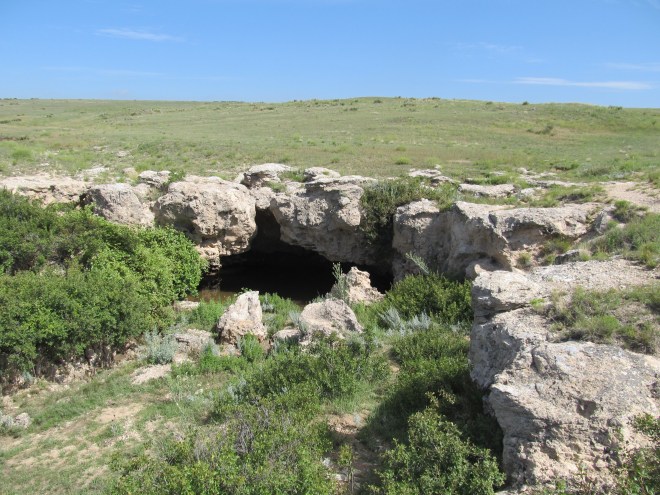
Cave in Battle Canyon. Photo by Mark Conard.

Cave in Battle Canyon. Photo by Mark Conard.

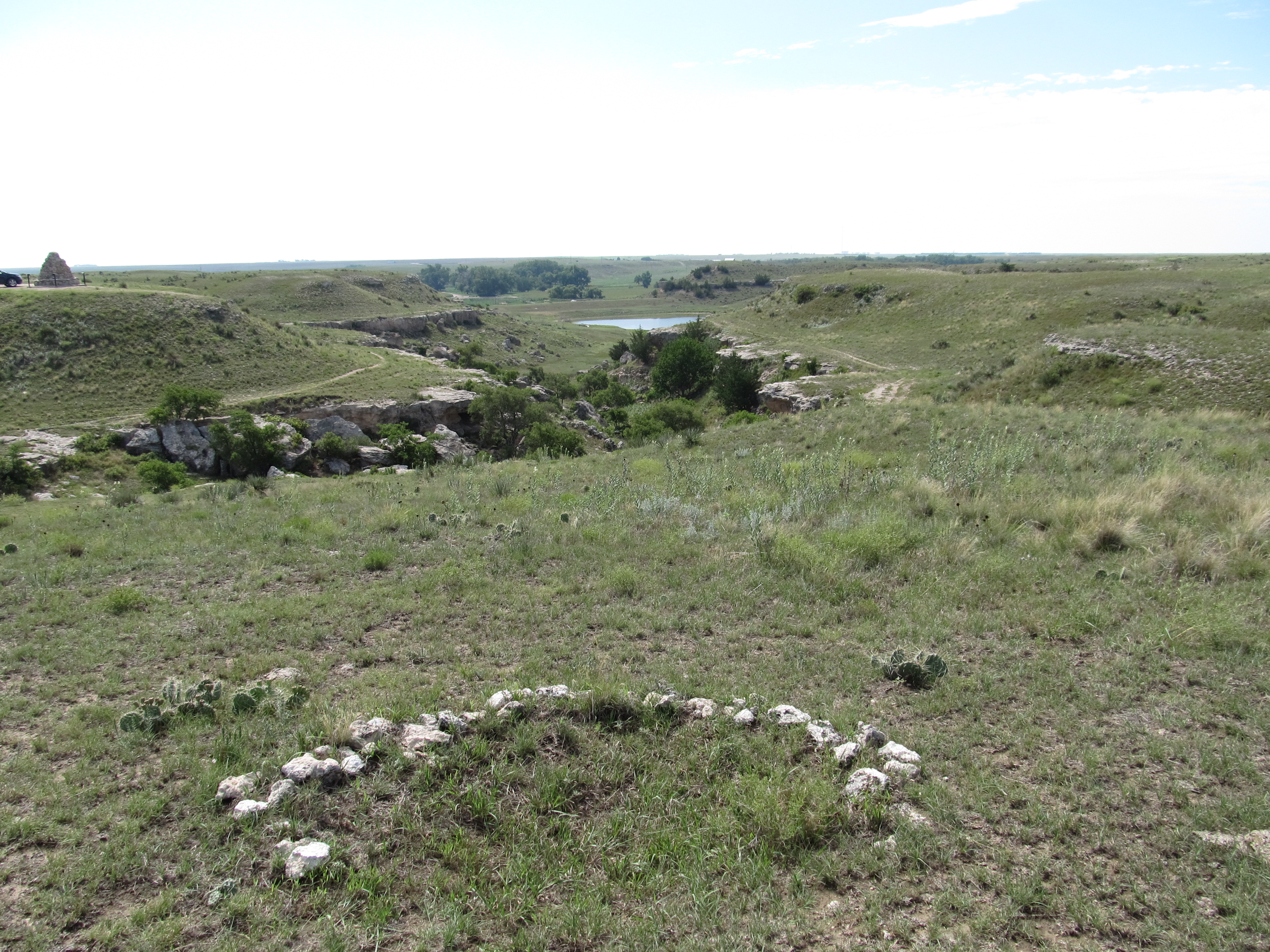
It’s been 135 years since the Northern Cheyenne and the US Cavalry were both at Punished Woman’s Fork, and this weekend, both will be back.

It was on September 27, 1878, the Northern Cheyenne, on their way back to their homeland, fought their last battle with the US Army in Kansas, a mile south of present day Scott City and Lake Scott State Park along Highway 95. In honor of that historic event, El Quartelejo Museum and Jerry Thomas Gallery and Collection are hosting the 135th Battle Canyon Symposium on September 27 and 28, 2013.

For a national historic site, it’s surprisingly unchanged from what it would have been like 135 years ago. That’s part of the beauty of the western prairie. Much has remained unchanged, and the rolling hills and canyons that were the site of such history and bloodshed remain steadfast, silent witnesses to a story that has often been overlooked.

Events

Dedication from 4:00 to 5:30pm on Friday 9/27 at Punished Woman’s Fork National Historic Site. It was at 4:00pm on September 27 that the fighting began at the site.

Following the dedication and at the El Quartelejo Ruins Monument Site in Lake Scott State Park: native song and dance performance by the Northern Cheyenne and a 4th US Cavalry exhibition from 6 to 8:30pm.

Saturday is the big day with the Jerry Thomas Gallery and Collection at El Quartalejo Museum hosting the speakers, including Northern Cheyenne leaders, descendants from the Cheyenne chiefs, and historians.

History

Sent to a Southern Cheyenne Reservation in Oklahoma in 1877, the Northern Cheyenne had little food and there was a measles outbreak, and there was little hope of survival. Dull Knife and Little Wolf, Cheyenne chiefs, took matters into their own hands, and the night of September 9, 1878, with the fires left burning, they led over 300 Cheyenne off the reservation. They were headed back to Yellowstone Country, 1500 miles away.
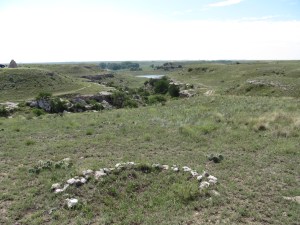
Rifle pit

Rifle pit. Photo by Mark Conard

By September 13, 1878, troops had found them, and surrender was offered as an option. Dull Knife refused to go back to the reservation, and Cheyenne and army troops began fighting.

A cat and mouse game continued through the next week with the Cheyenne trying to get away and fighting back until they reached “Punished Woman’s Fork” on September 25, 1878.

This was to be the place of their last stand, and it was chosen specifically. The remote canyon had a natural cave at one end where women, children, and the elderly could take shelter, and along the hills and bluffs, rifle pits could be dug to provide cover for the Cheyenne fighters. The US soldiers could be lured into the canyon (now known as Battle Canyon) and ambushed with the landscape acting as an additional weapon for the Cheyenne.

One of the fighters described the incoming soldiers: “A great angry snake of whites come against us in the morning.”

September 27, 1878, those not fighting took shelter in the cave, and the battle began. The Cheyenne ended up backed into Battle Canyon, but they drove the army back and took out Lt. Col. Lewis, Commander of Ford Dodge, Kansas, who’d once said “I will run the Cheyenne to ground or leave my body on the prairie.” He did the latter.

The night of September 27, the US army pulled back to camp, and the Cheyenne again made their escape in the night with their fires left burning and continued heading north.

Nearby trails

The trail around the perimeter of Lake Scott State Park will be one of our top 10 trails in the guidebook. Easy to follow, it’s got some incredible views out over the lake and of the nearby cliffs.

Hikes in Hutchinson

The State Fair may be over for another year, but there’s still plenty to do in Hutchinson. After a tour of the Salt Museum or the Cosmosphere, you can check out the nearby trails.

Martinez Trail

While this won’t be mapped and included in our trail guide since it’s primarily paved, the 3 mile trail winds around Carey Park and past the Hutchinson Zoo. The trail also connects Rice Park and Carey Park with a 3 mile section close to Cow Creek. It’s a smooth, easy ride with several access points along the way. All the parks and the trail are free entry with no cost for parking.

Dillon Nature Center

The area (3002 E. 30th Street) was originally owned by the Dillon Stores company which maintained the area as a private recreation spot for employees before donating the land to the city of Hutchinson. The beauty of the Dillon Nature Center can best be experienced by a leisurely stroll along the well maintained set of hiking trails that include several short family-friendly loops.

The pond at Dillon Nature Center

The pond at Dillon Nature Center

To learn more about the history of the area, check out the Discovery Center with its interactive exhibits. It also has an observation deck and picture windows overlooking the pond, which is stocked for fishing.

The trails encircle the spring-fed pond at the heart of the nature center where painted turtles bask lazily along submerged logs.  In late spring, there are an amazing profusion of colorful blooms in extensive beds of annual flowers planted throughout the area.

The nature center has been designated a National Urban Wildlife Sanctuary and the multitude of blooming flowers attracts a diverse array of pollinators including a variety of butterflies.  The Jim Smith Family Playscape is a safe, fun place for children of all ages to explore the natural world through play.

Sand Hills State Park

Northeast of Hutchinson, this 1,123 acre state park has several trail options available. The formerly active and shifting dunes of open sand have been stabilized by the roots of big sandreed, sand bluestem, and sand dropseed that are a core component of a unique assemblage of plants within the sand prairie landscape of this region.  The dunes themselves rise to heights of up to 40-feet and provide considerable topographic variation to an otherwise flat landscape.

The park includes eight interconnected trails ranging in length from 1-4 miles with a total of 14 miles of hiking and biking trail within the park.  To navigate the network of mowed trails throughout the park, it helps to keep an eye on the brown carsonite trail markers that provide a color-coded marker for each separate trail route.

This is one of the few state parks in Kansas that is not associated with a reservoir, and the trails weaving amidst the dunes are the main attraction.  The entire area is maintained in a natural state and there are no developed roads within the park itself.  All trails are accessible from parking lots located along 56th Avenue on the south border and 69th Avenue on the north border of the park.  Permits must be purchased from the self-pay stations located at each park entrance for parking at trailheads and no overnight camping is allowed.


Favorite fair foods: Funnel cakes

The Kansas State Fair is in full swing and we’re hard at work getting the book ready as well as information on the Hutchinson area’s best hikes, so just a quick update on one of the highlights of the fair – the food!

English: A funnel cake covered in powdered sugar.

A funnel cake in powdered sugar. (Photo credit: Wikipedia)

For those of you who love the sweet, fried taste of funnel cake, there are at least five locations at the 2013 Kansas State Fair where you can get a funnel cake.

Varieties this year include Birthday Cake, Chocolate, Dutch Apple Pie, Maple Bacon, Red Velvet, Strawberry, Strawberry Shortcake, and Turtle–not to mention a Funnel Cake Sundae.

Kansas State Fair Turns 100!

2013 is the 100th year of the Kansas State Fair. This year’s extravaganza takes place from September 6 – 15. The mission of the fair is: “To promote and showcase Kansas agriculture, industry and culture, to create opportunity for commercial activity, and to provide an educational and entertaining experience that is the pride of all Kansans.” We’re hoping that in 2014, we’ll be a part of the fair activities with more detailed information on the book and (hopefully) the chance to preorder, and by 2015, you’ll be able to leave the fair with a copy of our book in hand!

The Kansas Department of Wildlife, Parks, and Tourism will have an aquarium exhibit at the fair, north of the expo center near gate 9. The 400-foot long aquarium will be stocked with fish from around Kansas.

Along with carnival rides, arts & crafts, and livestock, the fair always has an amazing selection of fried foods (cookie dough, peaches, Kool-Aid – all can be deep fried). Let us know in the comments what your favorite fair foods are!

To help you get in the spirit, here are some photos from fairs past. All photos by Mark Conard.

Favorite fair food? Let us know in the comments below! Me? I’m partial to the classics: turkey leg and funnel cake.