Smoky Valley Ranch Long Loop | Garmin Adventures

One of the cool features about Garmin is that with their BaseCamp software, you can check out other trails and create “adventures” from the trails you’ve been on that include the photos taken with the GPS and all the waypoints. Publishing the adventure through BaseCamp means that others can download it and use the information.

Below is an example of the adventures – our trip through the shortgrass prairie and Cretaceous chalk formations at Smoky Valley Ranch: the answer to last week’s “Do you know where this is?“. It’s also a kind of preview for the book. We’ll be including detailed maps, made with Garmin GPS devices, that include important waypoints along the trail. What’s missing in the adventure that you’ll get in the book is the description of the area and the trail itself, but the map gets you halfway there.

Check it out and let us know what you think.

Smoky Valley Ranch Long Loop | Garmin Adventures.

And the answer is….

Smoky Valley Ranch!

Lake Scott State Park is within the same region, and more well known, so those were good guesses, but the location of these chalk cliffs is the Nature Conservancy’s Smoky Valley Ranch in Logan County.

Cretaceous Formations

Cretaceous Formations

There is a 1 mile loop and a 5 mile loop through the shortgrass prairie and throughout the hike are chalk cliffs, though these, the most impressive, are located primarily along the 1 mile loop.

It can be a bit tricky for route finding on the 5 mile loop – I managed to make it about 7 miles, but that came from following cattle tracks when they criss-crossed the main hiking trail, and not having a clear description of the trail (which you’ll have with the publication of our book), though even when adjusting the track to correctly follow the trail, the long loop came out to about 5.5 miles.

I was saved by being able to see my exact location on the Garmin GPS device – I would recommend one of those, or at least a compass on this particular trail. Out on the shortgrass prairie, once you get over the ridges and can no longer see the formations shown above, it can be easy to get turned around and in the open prairie, there are no trees, so it’s best hiked in either spring or fall.

All that being said, it’s a pleasant hike through some unique terrain. It’s free and open only to hikers. On the trail, keep an eye out for badgers, turtles, and hawks. It’s also a new site for the federally endangered black footed ferret.

To best explain why the place is important and worth a visit, I’ll use an excerpt from the website:

Why the Conservancy Selected this Site

This area is a rare remnant of shortgrass prairie and home to the green toad, a state-threatened amphibian, and the swift fox. In addition to its biological significance, it is a living repository of geological, paleontological, archaeological, historical and cultural history.

Pre-Historic History

The chalk badlands along the Smoky Hill River contain a rich fossil record of animals that lived in a vast inland sea that covered Kansas during the Cretaceous Period, some 80 million years ago. The Cretaceous Period was part of the Age of Reptiles, an era famous for its dinosaurs. Although dinosaurs were restricted to landmasses far from western Kansas, their marine representatives — mosasaurs and plesiosaurs — roamed the seas. Besides these large marine reptiles, huge turtles, sharks, flying reptiles, giant clams, and toothed-birds inhabited the area. Because fossil remains are so well-preserved and scientifically significant, the chalk badlands are among the world’s most famous locations for fossils from this era.

A Paleoindian site, the first physical evidence that humans inhabited North America at the end of the last Ice Age, was unearthed on Smoky Valley Ranch in 1895. This discovery contradicted contemporary theory and was not confirmed until 13 years later when a similar discovery was made in Folsom, New Mexico.

Vote: Do you know where this is?

One thing we’ve discovered about really diving into the trails around Kansas is that it’s a more diverse place than we realized before we started this project, and we can’t wait for the book to come out so you can see all the great places there are to explore here.

Here was one vista we came across on our research. Do you know where this is? Vote in the poll – we’ll see how well you know the diverse landscapes of the Sunflower State.

Where am I?

Staying hydrated on the trail: Bottle or hydration pack?

Hydration is key on the trails, and when it gets hot over the summer, the quickest way to get into trouble is to run out of water. If you find yourself with a headache or feeling thirsty, you’re already getting dehydrated. Here are some pros and cons we’ve found for the ways to stay hydrated on the trail.

Bottles

More traditional, the best bottle to carry is a hard plastic or stainless steel as compared to the softer plastic of disposable water bottles. One clear benefit to a water bottle is that it’s typically cheaper than a hydration pack system. Our favorite brand is Nalgene, in part because they’re guaranteed for life. The standard Nalgene bottle carries 32 ounces, which is just under one liter.

Other sizes are available, typically a half size bottle at 16 ounces or about half a liter. The options don’t end there; you can go for a wide mouth bottle (easier to put in ice, can be harder to drink from quickly) or a narrow mouth (won’t easily fit ice) or a squirt bottle.

Narrow-mouth Nalgene bottle

Narrow-mouth Nalgene bottle (Photo credit: Wikipedia)

With clear bottles, you can easily see how much water you have remaining, which can help keep you focused – if you’re halfway out of water and not halfway done with your hike, maybe you should turn around.

They are also easy to clean. You can put a hard plastic or stainless steel bottle into a dishwasher. Nalgene recommends using the top shelf in the dishwasher, and then just leave it to air dry – don’t screw the lid back on until it’s completely dry – better to store it with the lid off to help prevent any mold growth.

Smaller water bottles can be easily held in your hand, and this can make them more convenient than a hydration pack for trail runners as there is no pack to bounce around on your back as you run. Many bikes also come with water bottle holders.

Bonus! You can show off your love of your favorite hikes or other past times by plastering your water bottle with stickers.

Some things to aware of with bottles

For a full day of strenuous activity, you’d want to carry more than one or be close to a potable water source to refill.

You’ll likely have to stop, or at least slow down, to get to your water, unless you have an easily accessible squirt bottle.

You may still have to carry a backpack or bag for other essentials.

Hydration Pack

Instead of carrying your water by hand, you can sling it on your pack. Flexible plastic water reservoirs can be slipped into a backpack, and you get to it with a hose. Bite on the mouthpiece and suck, and, presto!, hydration. If you keep it clean and take care of it, it should last a long time.

I used a reservoir I got from Wal-Mart for awhile, and I often ended up setting my bag down on the mouthpiece, and losing water and getting clothes and other items in my bag wet as water pooled beneath the bag.

Coughing up a bit more cash, I got a Platypus Big Zip 3.0 L that comes with a mouthpiece that can be closed and will shut off the flow of water, and I fell in love. It was my hydration source of choice this summer doing research on the trails. Another brand we trust from experience is CamelBak. Both companies design water reservoirs and the packs to carry them.

Hydration pack manufactured by CamelBak

Hydration pack manufactured by CamelBak (Photo credit: Wikipedia)

Three liters (about 100 ounces) is on the higher end, and filled up, you’re looking at carrying nearly seven pounds of water. Though throughout the hike or ride it will get lighter, it can be too much. A two liter reservoir is fairly standard for a day hike or ride, and kids or those going on shorter trips can easily get away with carrying one liter.

Like a bottle, there are options beyond size. Most companies differ in the opening size for getting water in, though nearly all are big enough to easily add ice.

While you can carry the water reservoir in nearly any kind of backpack, there are specially designed hydration packs that have a space for the hose to come out without having to keep the bag open. You’ll find that many backpacking bags will have a hydration “sleeve” where you can slip in the water bag.

You can get minimalist packs for your reservoir that may not have many or any storage options, or you can go for a larger pack that has room to carry snacks, your Kansas trails guidebook!, and a waterproof layer.

Some things to be aware of with a hydration pack.

Combined with the pack, the water reservoir can be significantly more expensive than a water bottle.

Other than weight or stopping to check your water level, you can end up running out without noticing until you get down the last sips of water. And you have to pay more attention to cleaning, especially if you use a sports or energy drink in the reservoir.

Keeping it dry and free of mold can be a tad more challenging than with a bottle that can be tossed into a dishwasher easily. But as long as you rinse and dry it out after using it, it should be fine. I’ve kept water in it for a week at a time, just topping off the water until I had some days off when I wouldn’t be using it. Emptying it and setting it out to dry, and I had no problems with mold. But if you’re using a sports drink in it, you’ll want to rinse it thoroughly, possibly with a couple of teaspoons of baking soda and hot water, and leave it to dry every time that you use it.

Either bottle or hydration pack, if taken care of, can last you for years.

Finding the way to carry water that works best for you will help keep you safe and comfortable on the trail, and it will help you go further and faster. Always remember to balance your water intake with keeping your electrolytes and sugars balanced. Snacking on pretzels or salted nuts can help.

What’s worked best for you? Let us know in the comments.

Top 3 trails that you’ve never heard of. . .

Part of the allure of hiking and biking in Kansas is the opportunity to get off the beaten path and explore all that the state has to offer. For the intrepid adventurer, here are three hidden gems that are worth venturing off the interstate to experience.

Allegawaho Memorial Park

Kanza Trail at Allegawaho Memorial Park

1. Allegawahoo Memorial Park – Council Grove
Rich in both history and scenery, this 2-mile trail west of Council Grove allows hikers to trek through a site that was occupied by the Kaw Indian Nation until 1872. The trail includes killer views along the upland ridges of the pristine Flint Hills tallgrass prairie, and historical sites including ruins of limestone cabins and the federal agency building for the reservation.

2. Agave Ridge Trail – Cedar Bluff Reservoir
You know that a trail is relatively unknown if the front desk staff at the state park office isn’t even familiar with it.  Despite the lack of publicity, we think that the Agave Ridge Trail is one of the top trails in the western part of the state.  The chalky white limestone bluffs and steep canyons throughout the trail provide a hiking or riding experience with sweeping views and some dramatic elevation changes.  The overall landscape is similar in some ways to the acclaimed Switchgrass Trail at Wilson Lake but with even more solitude (and wildflowers).

3. Camp Alexander – Emporia
The Flint Hills is the ultimate destination for many Kansas hikers and most people are familiar with the excellent hiking opportunities at Konza Prairie and the Tallgrass Prairie Preserve. For those wanting to venture out and explore more of the Flint Hills, we recommend the 5-miles of trails at Camp Alexander. Bikers will find a mix of terrain, with a few technical sections mixed in with some fast-riding singletrack routes.

These are a few of our favorite “hidden gems”, what trails have you enjoyed that have taken you on the road less traveled?

Eldridge Hotel in Lawrence

Visiting Black Jack Battlefield was just step one of my jump into the history of the Bleeding Kansas era. While in Lawrence, thanks to the help of the Lawrence Convention & Visitors Bureau, I was put up in The Eldridge Hotel in downtown Lawrence.

History

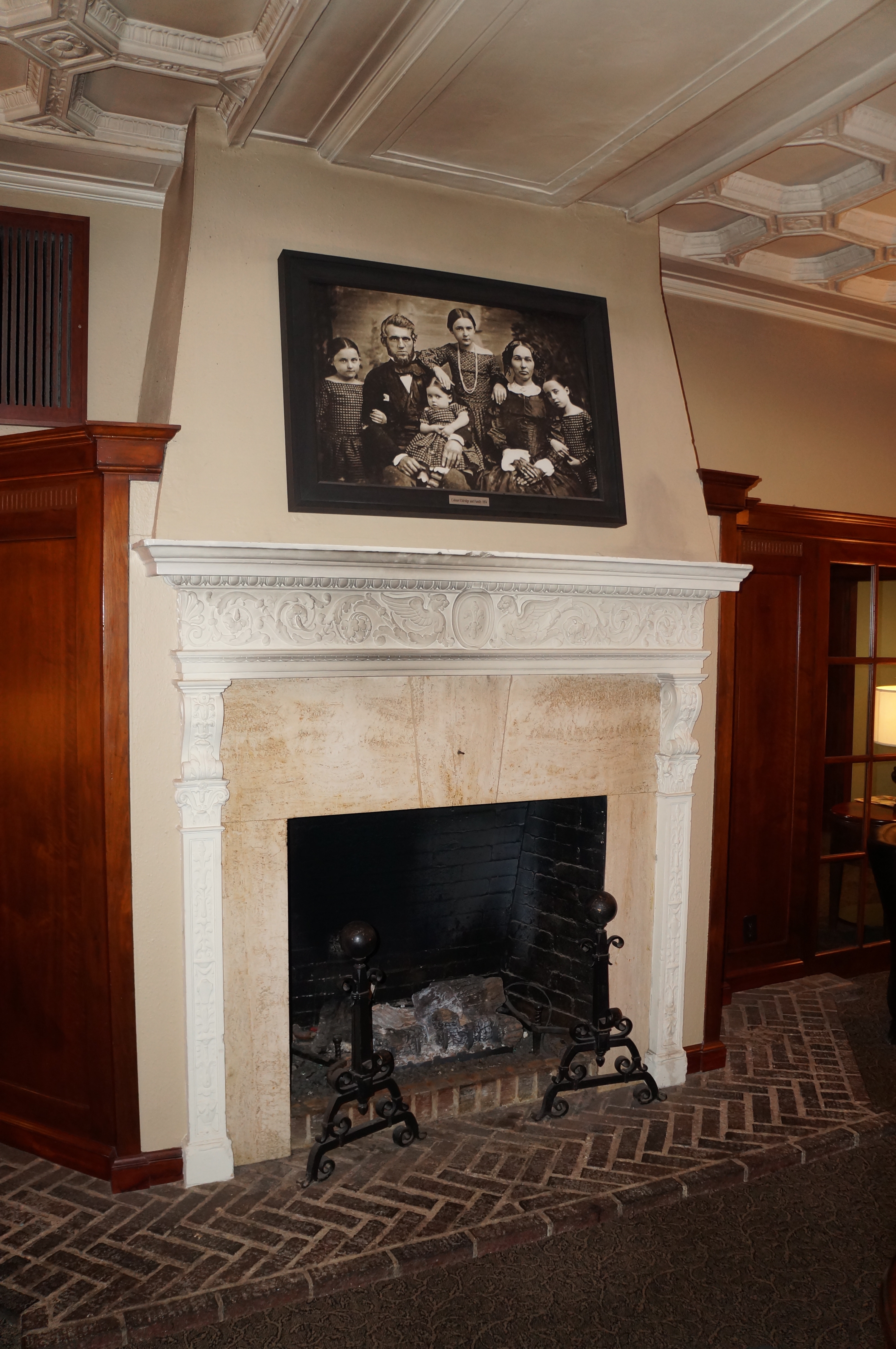
Lobby fireplace

Lobby fireplace

The first hotel on the site of the current Eldridge Hotel was called the Free State Hotel, a very politically charged name for the 1850s. Built in 1855 by settlers from the New England Emigrant Aid Society, the hotel stood for just a year before Sheriff Sam Jones and a pro-slavery group burned it down.

Colonel Eldridge rebuilt the hotel, including an additional floor, and said that each time it was destroyed, he’d build it back with another floor. Sadly, he had to do just that after Quantrill’s raid in 1863 as much of the city, including the Free State Hotel, was burned.

Colonel Eldridge stayed true to his word and rebuilt the hotel, and it was renamed The Hotel Eldridge. From the 1860s, the hotel has gone through some changes. Torn down and rebuilt to reflect its former glory in 1925, it was then closed as  a hotel on July 1, 1970, and it was converted to apartments.

In the 1980s, a multi-million dollar transformation turned it back into a hotel, and another influx of money and work in 2005 restored the hotel back to its “original 1925 grandeur.”

Hotel Features

The Eldridge is all about service and style. All the rooms are suites with a separate sitting area, mini-refrigerator, flat screen TVs, and free WiFi! That’s right – a higher end hotel that doesn’t charge an extra fee for WiFi – harder to come by than you might think.

While its definitely a 3+ star hotel, it’s not stuffy or unapproachable. The lobby furniture is comfortable, and the staff are friendly and helpful. Best of all, or at least for me, it has real character. Thanks to its history and design, its a unique spot and you won’t wake up and not know where you are, like in some chain hotels.

Comfy king bed

Comfy king bed

The hotel knows that since it’s downtown in a college town, there’s likely to be noise on weekends, so earplugs can be found by the beds. I found it quiet, but I was also there over the summer on a weekday.

Other nice details include the super comfortable mattresses, unquestionably clean linens (hoteliers – always go for white on white bed linens – guests know immediately that they’re clean), and it’s easy to walk just about anywhere in downtown Lawrence. Though, this does mean parking comes at a price – valet parking is $10.

Happy Hour and More

Why have just one restaurant when you can have two? The Jayhawker is the more casual of the two with a 4:00-6:30pm Happy Hour during the week and drinks specials throughout the week. The bar off the lobby fills with natural light from the large windows, and the menu features local brews along with specialty cocktails and wines. For a full dinner (or breakfast or lunch), there’s TEN, on the other side of the lobby with a fancier vibe and what seemed like an older crowd than The Jayhawker.

Haunted

With so much history, for those who believe in ghosts and spirits, it makes sense that the hotel would be haunted. It’s a stop for the Ghost Tours of Kansas, since the spirit of Colonel Eldridge still wanders the halls. He didn’t die there, but apparently just loved it so much, he never left. The most haunted spot in the hotel is reportedly the 5th floor, specifically room 506 where an original cornerstone allows ghosts to move between our world and theirs. Who knows?

Believers may experience unexplained events and feel let down without them. While I had no otherworldly sightings, I was able to easily check out downtown Lawrence and get a great night’s sleep, so I was happy!

If you go:

Rooms from $120

701 Massachusetts Street
Lawrence, KS 66044

800-527-0909
info@eldridgehotel.com

BBQ, music, and riding: Bike events this weekend

Hikers aren’t the only ones out on the trails. Many of the best trails we’ve found in Kansas have been made for mountain biking. And this weekend, 8/24 and 8/25, there are some great bike races and events going on throughout the state.

Cruise the Blues Mountain Bike Race – 8/23-8/25/2013

Amidst the timber, pastures, and prairie of the Palen Family Farm east of Tipton, the Palen family has built 13 miles of mountain biking trails. These private trails are open to riders this weekend for the 10th annual Cruise the Blues bike race.

5-mile and 9-mile race options are available that can be ridden solo or as a part of a team, and there’s a kid’s race course as well. There will be bbq, live music, and general hilarity throughout the weekend.

From the Cruise the Blues website:

Make it a weekend! We invite you to join us out on the farm Friday, Saturday and Sunday August 23-25th.

Come on out and join us on Friday and Saturday nights with free camping under the big Oak trees on the Palen Family Farm and wake up to a farm fresh breakfast to get your day started right!

Friday night, get your registration check in out of the way early, and join us for a fun bike tour of the farm with Farmer Doug, savor the taste of a Farm Fresh Kansas Style BBQ and take a shot at the short course hot lap night time trial! (Lights will be made available for all riders who need them courtesy Doug Chambers at Golden Belt Bicycles.)

Saturday morning, wake up to a Palen Farm Fresh Breakfast and get ready for a great day of racing.

Stay the night on Saturday and enjoy an evening of fun and festivities, live music (the 5 piece band Gamma Raze will be playing Blues and old time rock and roll), bike games and more. Wake up to another farm fresh breakfast Sunday morning and enjoy open riding on the farm or join a guided ride of the IMBA Epic Designated Trails at Wilson Lake State Park.

Parking and camping is free! Free-wifi and electronic charging stations will be available along with primitive hot showers, washing stations, changing areas and bathroom facilities. RVs welcome!

Click here for registration.

Rock & Roll to Roots – 8/24/2013

The Roots Festival ($15 entry cost) held in the Paola Square brings together bluegrass, bbq, and biking. The Miami County Velo Cycling Club is hosting 10, 30, and 60 mile rides. While registration is closed, you can cheer on participants as they start and finish at Wallace Park on the morning of 8/24.

PedalFest – 8/24/2013

A cross country mountain bike race.

A cross country mountain bike race. (Photo credit: Wikipedia)

Three leisurely rides through the Wichita countryside for PedalFest will benefit Heartspring, an organization that helps kids with special needs achieve more independence.

Choose from a 50K (31 miles), 100K (62 miles) and Family Ride (5 mile). The 50K and 100K start at 7:30am and the Family Ride starts at 9:30am from Heartspring in Wichita.

Registration is still open Friday until 6pm at Bicycle Pedaler and early Saturday morning at the race start at Heartspring. Registration is $45 for the 50K and $50 for the 100K. The 5-mile Family Ride is $10 per person. For registration, you get food and a t-shirt along with a handful of other perks and freebies.

Shawnee Rotary Bike Rodeo – 8/24/2013

Perfect for kids and for giving parents some peace of mind, this event at the Mill Valley High School (5900 Monticello, Shawnee) is all about staying safe while having fun on your bike. From 9am to noon, kids who plan to ride their bikes to school can learn safety training, and get a certificate after completing a skills course. Freebies include: t-shirt, bike helmet, bike helmet fitting, and bike inspections.

Tour de Shawnee – 8/25/2013

This annual event, now in its 24th year, gives participants the choice between a 12-mile and a 25.75-mile route through bike-friendly Shawnee. For $30, you get a t-shirt, breakfast, and lunch. Along the way, there will be snacks, drinks, and vehicle support, including medical assistance and bike repair. You also get the satisfaction of knowing that you’re participating in an event that benefits the Juvenile Diabetes Research Foundation.

The tour will start and end at Power Play Family Entertainment Center, Shawnee Mission Parkway and Pflumm.

Fill out a registration form and drop it off at the Shawnee Civic Centre, 13817 Johnson Drive.

History and Hiking: Black Jack Battlefield

Our book will include “top” trails – top 10 best, best for mountain bikers, best for wildflowers, etc. along with best for history. One of those history trails is at Black Jack Battlefield.

Black Jack Battlefield, near Baldwin City, was the site of one of the first battles of the Civil War, and it was  designated as a National Historic Landmark in 2012. It was described as the place for the first shots fired in the Civil War on a recent episode of the National Geographic show “Diggers.”

Bonus history – this location also has some wagon ruts from the Santa Fe Trail.

To the battle!

To the battle!

The history in Kansas at this time was so violent, it’s been referred to as  “Bleeding Kansas.” The events, in short, that led up to the battle at Black Jack Battlefield:

Abolitionist John Brown led the fight against the pro-slavery forces led by Henry C. Pate from Missouri on June 2, 1856. That’s the same Henry C. Pate who was in the group that burned Lawrence on May 21, 1856. Shortly after the Lawrence was looted, John Brown and others executed five pro-slavery men at Potawatomie Creek, and then three anti-slavery men were taken prisoner by Pate, two of which were Brown’s sons. (Followed along so far?)

The five hour battle ended with John Brown’s side winning and his sons were released in exchange for the pro-slavery men who’d been captured.

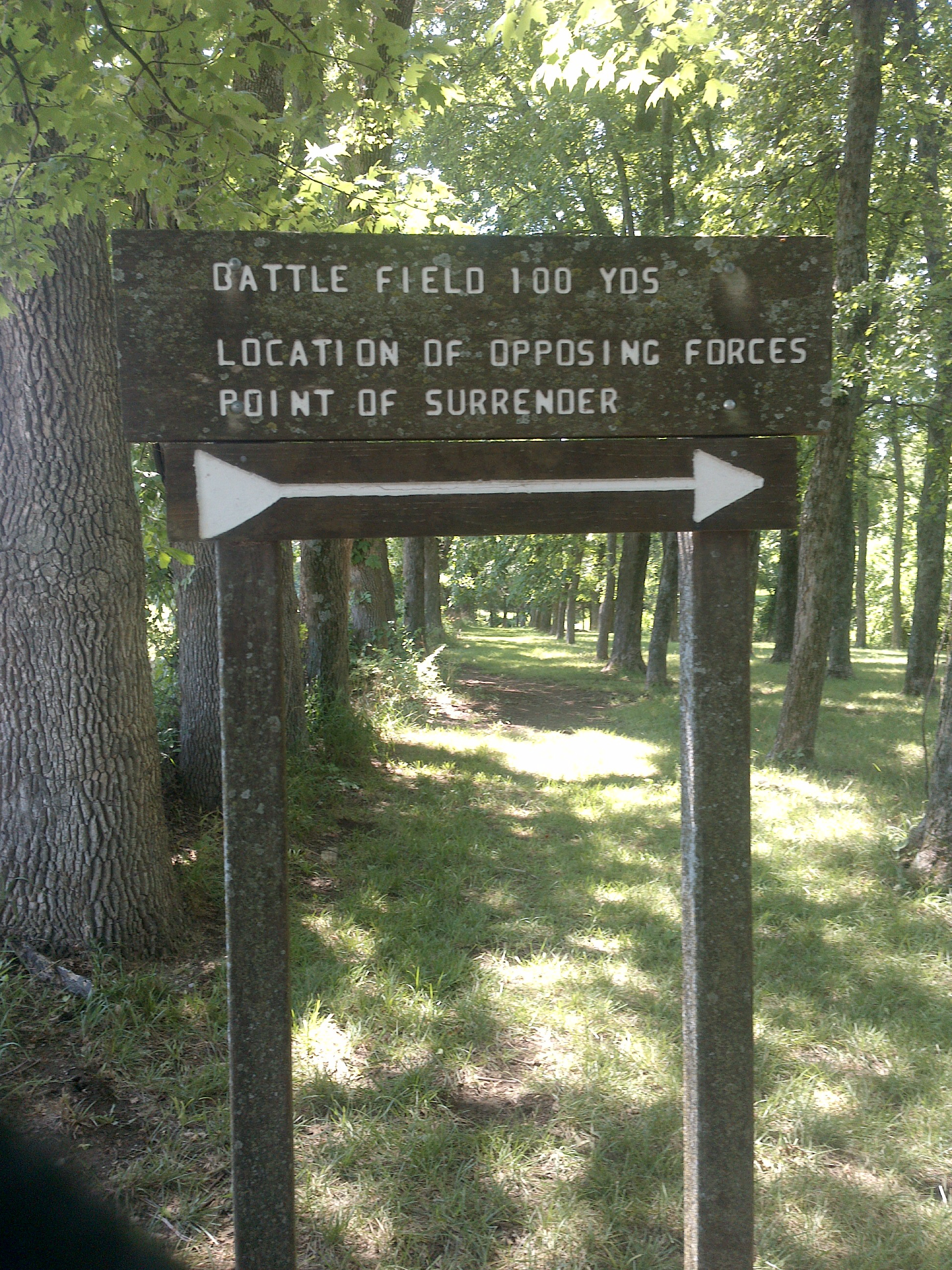
Self-guided tours of the site are available, and the brochure explains the history of the battle with nine stops from Pate’s position, the point of surrender, John Brown’s position and more. Free guided tours hosted every Saturday and Sunday at 1 pm through the third weekend of October.

Also linked to the shorter self-guided tour path is a nature trail and mowed grass trails through a prairie restoration area. It’s a pleasant walk through a place of huge historical significance, and the trails are well taken care of and easy to follow with signs on the nature trail identifying different plants and trees.

I always find it to be a bit odd to walk through a battlefield. As you would imagine, over 150 years later, other than the signs pointing out the pivotal moments of the battle, there is no sign that anything had ever happened there, much less something that helped kick off a war that changed the shape of America forever. It’s a quiet place, or at least it seems as though it would be on most days not during the guided tours, and I had the place to myself.

I always kind of expect to feel the weight of history in places like these. To somehow connect with the ones who crossed through in covered wagons or were prepared to die fighting over the issue of slavery. I never quite feel what I think that I should, which is silly since there is no “right” way to feel, but I think the best that can be done is to get out and go to places like these. To pay respect to what happened there by visiting and walking the trails and by appreciating the space that it is now. Walking the trails at Black Jack Battlefield is a way to connect with the simple, natural world of the prairie and with the complicated history of not just the state of Kansas, but with the nation, and there’s not a lot of places where you can do that.

If you go:

Open from dawn to dusk, 365 days a year

Free

163 E. 2000 Road
Wellsville, KS 66092

150 years later: Live tweet of Quantrill’s 1863 Raid

August 21, 1863. The border skirmishes that had been happening between pro-slavery Missouri and anti-slavery Kansas since the 1850s escalated with the burning and slaughter some 180 men in Lawrence.

Led by former Lawrence school teacher and outlaw William Quantrill in a well-planned attack, 400 men rode from Missouri to Lawrence in the morning hours. Much of the town burned and nearly 200 people were killed, some in front of their families. It wasn’t an entirely unprovoked attack. Lawrence had been a gathering place for “Jayhawkers” and other pro-Union fighters, and they’d crossed the border themselves in the past to attack Missouri towns.

And 150 years to the day of this horrific and historic event, the city of Lawrence has organized a unique event: a Community Twitter Project where community members have been given identities of those involved in the battle and will “live” tweet the event starting early on August 21. The tweets have already started, giving some background to those key players in the event. Check out the tweets here or follow #QR1863.

If you’re in the Lawrence area, you can learn more about the raid with the self-guided tour.

Review of Garmin Oregon 650t

Moving from the Garmin eTrex to the Garmin Oregon 650t was like moving from a rotary telephone to a smart phone. Don’t get us wrong – the rotary telephone still gets the job done, but the shiny new Garmin Oregon 650t’s that we have on loan to use for the book are just, well, they’re just amazing.

It’s hard to know where to begin. Some of the highlights:

Oregon 650t

Oregon 650t

  • Color touchscreen that changes orientation based on how you’re holding it – horizontally or vertically
  • 8 megapixel camera
  • USB connection to charge from a computer or an outlet AND the ability to swap out the rechargeable Garmin batteries with double A’s if you run out of juice on the trail – the device will beep to signal that it’s low on battery, and there’s ways to set the screen to help preserve battery life
  • Already loaded topographic maps
  • Easy to mark waypoints and space to take notes
  • A carabiner attachment to clip it to a backpack or belt loop
  • Waterproof – anyone who’s been in Kansas over this summer knows just how important that is
  • The ability to save 200 tracks and 4000 waypoints

Best of all – this handheld device hasn’t lost signal for us once, even in heavily wooded areas. So you always know where you are and what direction you’re headed in (or should be headed in.) You’re also guaranteed to know exactly how far you’ve gone and the accuracy of the track since the signal doesn’t drop out.

One of the convenient benefits that we found for making maps was the option to pause the track, so if you go off the trail, you won’t have a messy map when you upload your trail back home.

On the Trip Computer screen, you can easily find out how long you’ve been hiking/biking/riding, how fast you’re going, your overall average, etc. And along with following your track on the Trip Information screen, you can check out your elevation profile, and you can remember where you were on a certain day with the calendar. While sunrise and sunset are given, if you happen to get caught out after dark, there’s a flashlight.

Uploading information from the GPS is easy with a Mac or PC – the free BaseCamp software lets you design “Adventures” (one to be shown off on this site soon!) from the tracks you’ve recorded, the waypoints you marked, and the pictures that you took and then you can share that Adventure online.

Minor complaints

  • It’s easier to plug in the USB cord after taking off the carabiner attachment. It’d be a touch more convenient if it could easily be plugged in while the carabiner was still on
  • Sometimes the carabiner can get in the way of the camera – hold it down to make sure it’s out of the way

Yes, it’s pricier at $549, but you really do get what you pay for with this bad boy. I hate to have to give it back once the trails are mapped, and I’ve already started saving up to buy my own.