Kansas State Fair Turns 100!

2013 is the 100th year of the Kansas State Fair. This year’s extravaganza takes place from September 6 – 15. The mission of the fair is: “To promote and showcase Kansas agriculture, industry and culture, to create opportunity for commercial activity, and to provide an educational and entertaining experience that is the pride of all Kansans.” We’re hoping that in 2014, we’ll be a part of the fair activities with more detailed information on the book and (hopefully) the chance to preorder, and by 2015, you’ll be able to leave the fair with a copy of our book in hand!

The Kansas Department of Wildlife, Parks, and Tourism will have an aquarium exhibit at the fair, north of the expo center near gate 9. The 400-foot long aquarium will be stocked with fish from around Kansas.

Along with carnival rides, arts & crafts, and livestock, the fair always has an amazing selection of fried foods (cookie dough, peaches, Kool-Aid – all can be deep fried). Let us know in the comments what your favorite fair foods are!

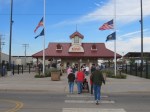
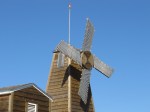
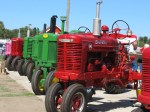
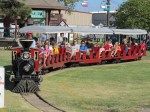
To help you get in the spirit, here are some photos from fairs past. All photos by Mark Conard.

Favorite fair food? Let us know in the comments below! Me? I’m partial to the classics: turkey leg and funnel cake.

Staying hydrated on the trail: Bottle or hydration pack?

Hydration is key on the trails, and when it gets hot over the summer, the quickest way to get into trouble is to run out of water. If you find yourself with a headache or feeling thirsty, you’re already getting dehydrated. Here are some pros and cons we’ve found for the ways to stay hydrated on the trail.

Bottles

More traditional, the best bottle to carry is a hard plastic or stainless steel as compared to the softer plastic of disposable water bottles. One clear benefit to a water bottle is that it’s typically cheaper than a hydration pack system. Our favorite brand is Nalgene, in part because they’re guaranteed for life. The standard Nalgene bottle carries 32 ounces, which is just under one liter.

Other sizes are available, typically a half size bottle at 16 ounces or about half a liter. The options don’t end there; you can go for a wide mouth bottle (easier to put in ice, can be harder to drink from quickly) or a narrow mouth (won’t easily fit ice) or a squirt bottle.

Narrow-mouth Nalgene bottle

Narrow-mouth Nalgene bottle (Photo credit: Wikipedia)

With clear bottles, you can easily see how much water you have remaining, which can help keep you focused – if you’re halfway out of water and not halfway done with your hike, maybe you should turn around.

They are also easy to clean. You can put a hard plastic or stainless steel bottle into a dishwasher. Nalgene recommends using the top shelf in the dishwasher, and then just leave it to air dry – don’t screw the lid back on until it’s completely dry – better to store it with the lid off to help prevent any mold growth.

Smaller water bottles can be easily held in your hand, and this can make them more convenient than a hydration pack for trail runners as there is no pack to bounce around on your back as you run. Many bikes also come with water bottle holders.

Bonus! You can show off your love of your favorite hikes or other past times by plastering your water bottle with stickers.

Some things to aware of with bottles

For a full day of strenuous activity, you’d want to carry more than one or be close to a potable water source to refill.

You’ll likely have to stop, or at least slow down, to get to your water, unless you have an easily accessible squirt bottle.

You may still have to carry a backpack or bag for other essentials.

Hydration Pack

Instead of carrying your water by hand, you can sling it on your pack. Flexible plastic water reservoirs can be slipped into a backpack, and you get to it with a hose. Bite on the mouthpiece and suck, and, presto!, hydration. If you keep it clean and take care of it, it should last a long time.

I used a reservoir I got from Wal-Mart for awhile, and I often ended up setting my bag down on the mouthpiece, and losing water and getting clothes and other items in my bag wet as water pooled beneath the bag.

Coughing up a bit more cash, I got a Platypus Big Zip 3.0 L that comes with a mouthpiece that can be closed and will shut off the flow of water, and I fell in love. It was my hydration source of choice this summer doing research on the trails. Another brand we trust from experience is CamelBak. Both companies design water reservoirs and the packs to carry them.

Hydration pack manufactured by CamelBak

Hydration pack manufactured by CamelBak (Photo credit: Wikipedia)

Three liters (about 100 ounces) is on the higher end, and filled up, you’re looking at carrying nearly seven pounds of water. Though throughout the hike or ride it will get lighter, it can be too much. A two liter reservoir is fairly standard for a day hike or ride, and kids or those going on shorter trips can easily get away with carrying one liter.

Like a bottle, there are options beyond size. Most companies differ in the opening size for getting water in, though nearly all are big enough to easily add ice.

While you can carry the water reservoir in nearly any kind of backpack, there are specially designed hydration packs that have a space for the hose to come out without having to keep the bag open. You’ll find that many backpacking bags will have a hydration “sleeve” where you can slip in the water bag.

You can get minimalist packs for your reservoir that may not have many or any storage options, or you can go for a larger pack that has room to carry snacks, your Kansas trails guidebook!, and a waterproof layer.

Some things to be aware of with a hydration pack.

Combined with the pack, the water reservoir can be significantly more expensive than a water bottle.

Other than weight or stopping to check your water level, you can end up running out without noticing until you get down the last sips of water. And you have to pay more attention to cleaning, especially if you use a sports or energy drink in the reservoir.

Keeping it dry and free of mold can be a tad more challenging than with a bottle that can be tossed into a dishwasher easily. But as long as you rinse and dry it out after using it, it should be fine. I’ve kept water in it for a week at a time, just topping off the water until I had some days off when I wouldn’t be using it. Emptying it and setting it out to dry, and I had no problems with mold. But if you’re using a sports drink in it, you’ll want to rinse it thoroughly, possibly with a couple of teaspoons of baking soda and hot water, and leave it to dry every time that you use it.

Either bottle or hydration pack, if taken care of, can last you for years.

Finding the way to carry water that works best for you will help keep you safe and comfortable on the trail, and it will help you go further and faster. Always remember to balance your water intake with keeping your electrolytes and sugars balanced. Snacking on pretzels or salted nuts can help.

What’s worked best for you? Let us know in the comments.

Top 3 trails that you’ve never heard of. . .

Part of the allure of hiking and biking in Kansas is the opportunity to get off the beaten path and explore all that the state has to offer. For the intrepid adventurer, here are three hidden gems that are worth venturing off the interstate to experience.

Allegawaho Memorial Park

Kanza Trail at Allegawaho Memorial Park

1. Allegawahoo Memorial Park – Council Grove
Rich in both history and scenery, this 2-mile trail west of Council Grove allows hikers to trek through a site that was occupied by the Kaw Indian Nation until 1872. The trail includes killer views along the upland ridges of the pristine Flint Hills tallgrass prairie, and historical sites including ruins of limestone cabins and the federal agency building for the reservation.

2. Agave Ridge Trail – Cedar Bluff Reservoir
You know that a trail is relatively unknown if the front desk staff at the state park office isn’t even familiar with it.  Despite the lack of publicity, we think that the Agave Ridge Trail is one of the top trails in the western part of the state.  The chalky white limestone bluffs and steep canyons throughout the trail provide a hiking or riding experience with sweeping views and some dramatic elevation changes.  The overall landscape is similar in some ways to the acclaimed Switchgrass Trail at Wilson Lake but with even more solitude (and wildflowers).

3. Camp Alexander – Emporia
The Flint Hills is the ultimate destination for many Kansas hikers and most people are familiar with the excellent hiking opportunities at Konza Prairie and the Tallgrass Prairie Preserve. For those wanting to venture out and explore more of the Flint Hills, we recommend the 5-miles of trails at Camp Alexander. Bikers will find a mix of terrain, with a few technical sections mixed in with some fast-riding singletrack routes.

These are a few of our favorite “hidden gems”, what trails have you enjoyed that have taken you on the road less traveled?

BBQ, music, and riding: Bike events this weekend

Hikers aren’t the only ones out on the trails. Many of the best trails we’ve found in Kansas have been made for mountain biking. And this weekend, 8/24 and 8/25, there are some great bike races and events going on throughout the state.

Cruise the Blues Mountain Bike Race – 8/23-8/25/2013

Amidst the timber, pastures, and prairie of the Palen Family Farm east of Tipton, the Palen family has built 13 miles of mountain biking trails. These private trails are open to riders this weekend for the 10th annual Cruise the Blues bike race.

5-mile and 9-mile race options are available that can be ridden solo or as a part of a team, and there’s a kid’s race course as well. There will be bbq, live music, and general hilarity throughout the weekend.

From the Cruise the Blues website:

Make it a weekend! We invite you to join us out on the farm Friday, Saturday and Sunday August 23-25th.

Come on out and join us on Friday and Saturday nights with free camping under the big Oak trees on the Palen Family Farm and wake up to a farm fresh breakfast to get your day started right!

Friday night, get your registration check in out of the way early, and join us for a fun bike tour of the farm with Farmer Doug, savor the taste of a Farm Fresh Kansas Style BBQ and take a shot at the short course hot lap night time trial! (Lights will be made available for all riders who need them courtesy Doug Chambers at Golden Belt Bicycles.)

Saturday morning, wake up to a Palen Farm Fresh Breakfast and get ready for a great day of racing.

Stay the night on Saturday and enjoy an evening of fun and festivities, live music (the 5 piece band Gamma Raze will be playing Blues and old time rock and roll), bike games and more. Wake up to another farm fresh breakfast Sunday morning and enjoy open riding on the farm or join a guided ride of the IMBA Epic Designated Trails at Wilson Lake State Park.

Parking and camping is free! Free-wifi and electronic charging stations will be available along with primitive hot showers, washing stations, changing areas and bathroom facilities. RVs welcome!

Click here for registration.

Rock & Roll to Roots – 8/24/2013

The Roots Festival ($15 entry cost) held in the Paola Square brings together bluegrass, bbq, and biking. The Miami County Velo Cycling Club is hosting 10, 30, and 60 mile rides. While registration is closed, you can cheer on participants as they start and finish at Wallace Park on the morning of 8/24.

PedalFest – 8/24/2013

A cross country mountain bike race.

A cross country mountain bike race. (Photo credit: Wikipedia)

Three leisurely rides through the Wichita countryside for PedalFest will benefit Heartspring, an organization that helps kids with special needs achieve more independence.

Choose from a 50K (31 miles), 100K (62 miles) and Family Ride (5 mile). The 50K and 100K start at 7:30am and the Family Ride starts at 9:30am from Heartspring in Wichita.

Registration is still open Friday until 6pm at Bicycle Pedaler and early Saturday morning at the race start at Heartspring. Registration is $45 for the 50K and $50 for the 100K. The 5-mile Family Ride is $10 per person. For registration, you get food and a t-shirt along with a handful of other perks and freebies.

Shawnee Rotary Bike Rodeo – 8/24/2013

Perfect for kids and for giving parents some peace of mind, this event at the Mill Valley High School (5900 Monticello, Shawnee) is all about staying safe while having fun on your bike. From 9am to noon, kids who plan to ride their bikes to school can learn safety training, and get a certificate after completing a skills course. Freebies include: t-shirt, bike helmet, bike helmet fitting, and bike inspections.

Tour de Shawnee – 8/25/2013

This annual event, now in its 24th year, gives participants the choice between a 12-mile and a 25.75-mile route through bike-friendly Shawnee. For $30, you get a t-shirt, breakfast, and lunch. Along the way, there will be snacks, drinks, and vehicle support, including medical assistance and bike repair. You also get the satisfaction of knowing that you’re participating in an event that benefits the Juvenile Diabetes Research Foundation.

The tour will start and end at Power Play Family Entertainment Center, Shawnee Mission Parkway and Pflumm.

Fill out a registration form and drop it off at the Shawnee Civic Centre, 13817 Johnson Drive.

History and Hiking: Black Jack Battlefield

Our book will include “top” trails – top 10 best, best for mountain bikers, best for wildflowers, etc. along with best for history. One of those history trails is at Black Jack Battlefield.

Black Jack Battlefield, near Baldwin City, was the site of one of the first battles of the Civil War, and it was  designated as a National Historic Landmark in 2012. It was described as the place for the first shots fired in the Civil War on a recent episode of the National Geographic show “Diggers.”

Bonus history – this location also has some wagon ruts from the Santa Fe Trail.

To the battle!

To the battle!

The history in Kansas at this time was so violent, it’s been referred to as  “Bleeding Kansas.” The events, in short, that led up to the battle at Black Jack Battlefield:

Abolitionist John Brown led the fight against the pro-slavery forces led by Henry C. Pate from Missouri on June 2, 1856. That’s the same Henry C. Pate who was in the group that burned Lawrence on May 21, 1856. Shortly after the Lawrence was looted, John Brown and others executed five pro-slavery men at Potawatomie Creek, and then three anti-slavery men were taken prisoner by Pate, two of which were Brown’s sons. (Followed along so far?)

The five hour battle ended with John Brown’s side winning and his sons were released in exchange for the pro-slavery men who’d been captured.

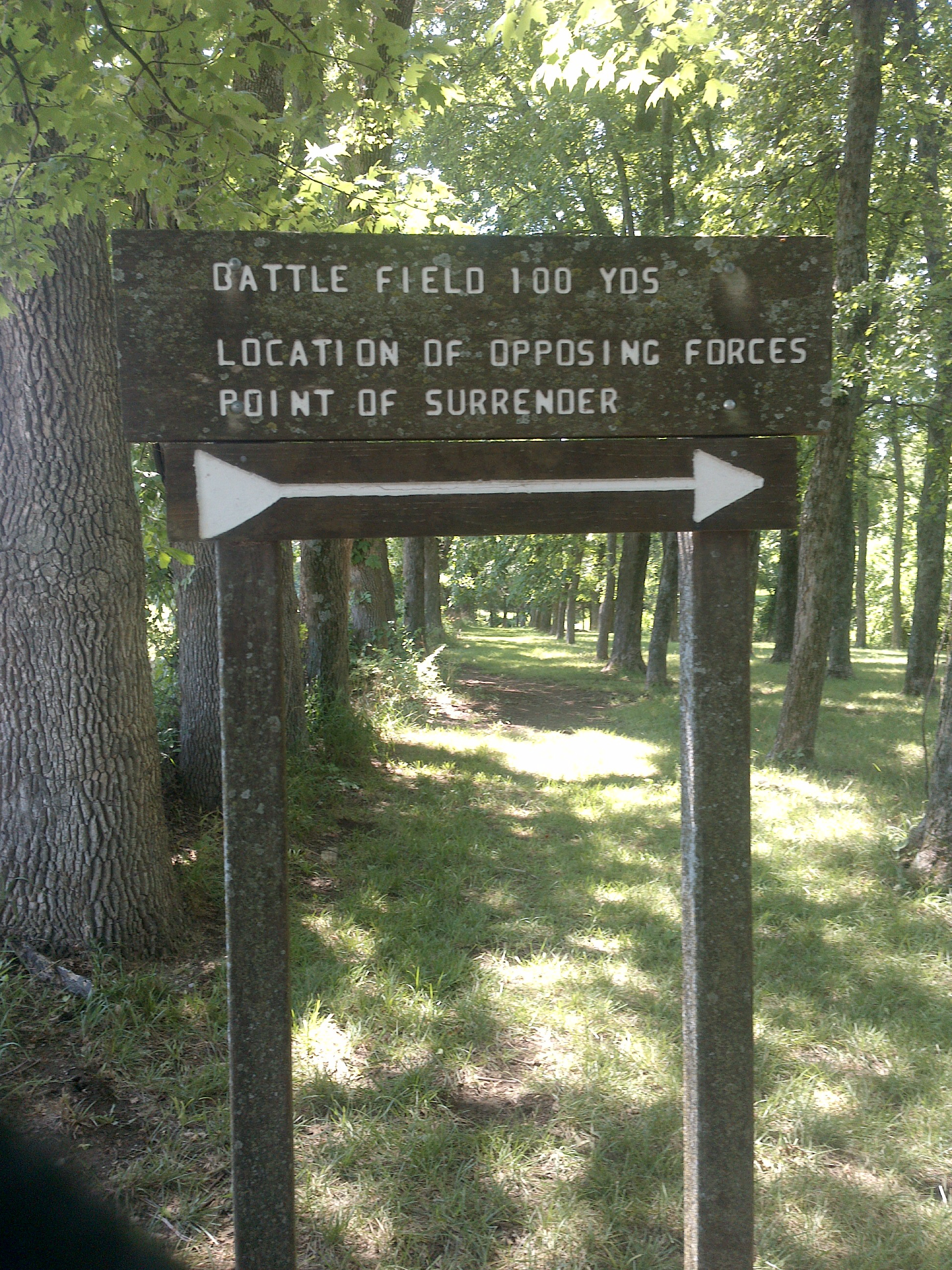
Self-guided tours of the site are available, and the brochure explains the history of the battle with nine stops from Pate’s position, the point of surrender, John Brown’s position and more. Free guided tours hosted every Saturday and Sunday at 1 pm through the third weekend of October.

Also linked to the shorter self-guided tour path is a nature trail and mowed grass trails through a prairie restoration area. It’s a pleasant walk through a place of huge historical significance, and the trails are well taken care of and easy to follow with signs on the nature trail identifying different plants and trees.

I always find it to be a bit odd to walk through a battlefield. As you would imagine, over 150 years later, other than the signs pointing out the pivotal moments of the battle, there is no sign that anything had ever happened there, much less something that helped kick off a war that changed the shape of America forever. It’s a quiet place, or at least it seems as though it would be on most days not during the guided tours, and I had the place to myself.

I always kind of expect to feel the weight of history in places like these. To somehow connect with the ones who crossed through in covered wagons or were prepared to die fighting over the issue of slavery. I never quite feel what I think that I should, which is silly since there is no “right” way to feel, but I think the best that can be done is to get out and go to places like these. To pay respect to what happened there by visiting and walking the trails and by appreciating the space that it is now. Walking the trails at Black Jack Battlefield is a way to connect with the simple, natural world of the prairie and with the complicated history of not just the state of Kansas, but with the nation, and there’s not a lot of places where you can do that.

If you go:

Open from dawn to dusk, 365 days a year

Free

163 E. 2000 Road
Wellsville, KS 66092

Review of Garmin Oregon 650t

Moving from the Garmin eTrex to the Garmin Oregon 650t was like moving from a rotary telephone to a smart phone. Don’t get us wrong – the rotary telephone still gets the job done, but the shiny new Garmin Oregon 650t’s that we have on loan to use for the book are just, well, they’re just amazing.

It’s hard to know where to begin. Some of the highlights:

Oregon 650t

Oregon 650t

  • Color touchscreen that changes orientation based on how you’re holding it – horizontally or vertically
  • 8 megapixel camera
  • USB connection to charge from a computer or an outlet AND the ability to swap out the rechargeable Garmin batteries with double A’s if you run out of juice on the trail – the device will beep to signal that it’s low on battery, and there’s ways to set the screen to help preserve battery life
  • Already loaded topographic maps
  • Easy to mark waypoints and space to take notes
  • A carabiner attachment to clip it to a backpack or belt loop
  • Waterproof – anyone who’s been in Kansas over this summer knows just how important that is
  • The ability to save 200 tracks and 4000 waypoints

Best of all – this handheld device hasn’t lost signal for us once, even in heavily wooded areas. So you always know where you are and what direction you’re headed in (or should be headed in.) You’re also guaranteed to know exactly how far you’ve gone and the accuracy of the track since the signal doesn’t drop out.

One of the convenient benefits that we found for making maps was the option to pause the track, so if you go off the trail, you won’t have a messy map when you upload your trail back home.

On the Trip Computer screen, you can easily find out how long you’ve been hiking/biking/riding, how fast you’re going, your overall average, etc. And along with following your track on the Trip Information screen, you can check out your elevation profile, and you can remember where you were on a certain day with the calendar. While sunrise and sunset are given, if you happen to get caught out after dark, there’s a flashlight.

Uploading information from the GPS is easy with a Mac or PC – the free BaseCamp software lets you design “Adventures” (one to be shown off on this site soon!) from the tracks you’ve recorded, the waypoints you marked, and the pictures that you took and then you can share that Adventure online.

Minor complaints

  • It’s easier to plug in the USB cord after taking off the carabiner attachment. It’d be a touch more convenient if it could easily be plugged in while the carabiner was still on
  • Sometimes the carabiner can get in the way of the camera – hold it down to make sure it’s out of the way

Yes, it’s pricier at $549, but you really do get what you pay for with this bad boy. I hate to have to give it back once the trails are mapped, and I’ve already started saving up to buy my own.

Discovering the Flint Hills Discovery Center

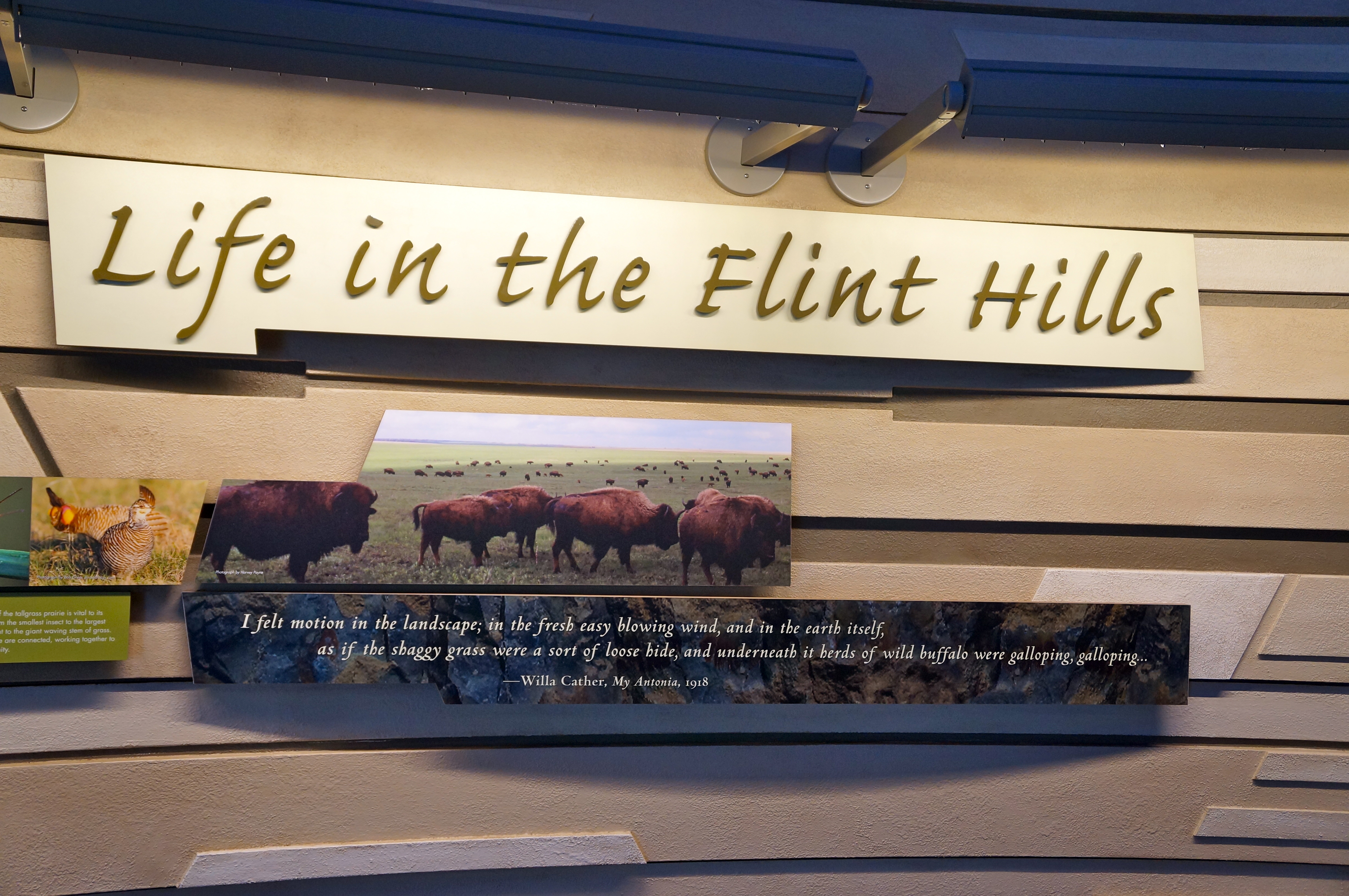
“The Flint Hills don’t take your breath away; they give you a chance to catch it.”

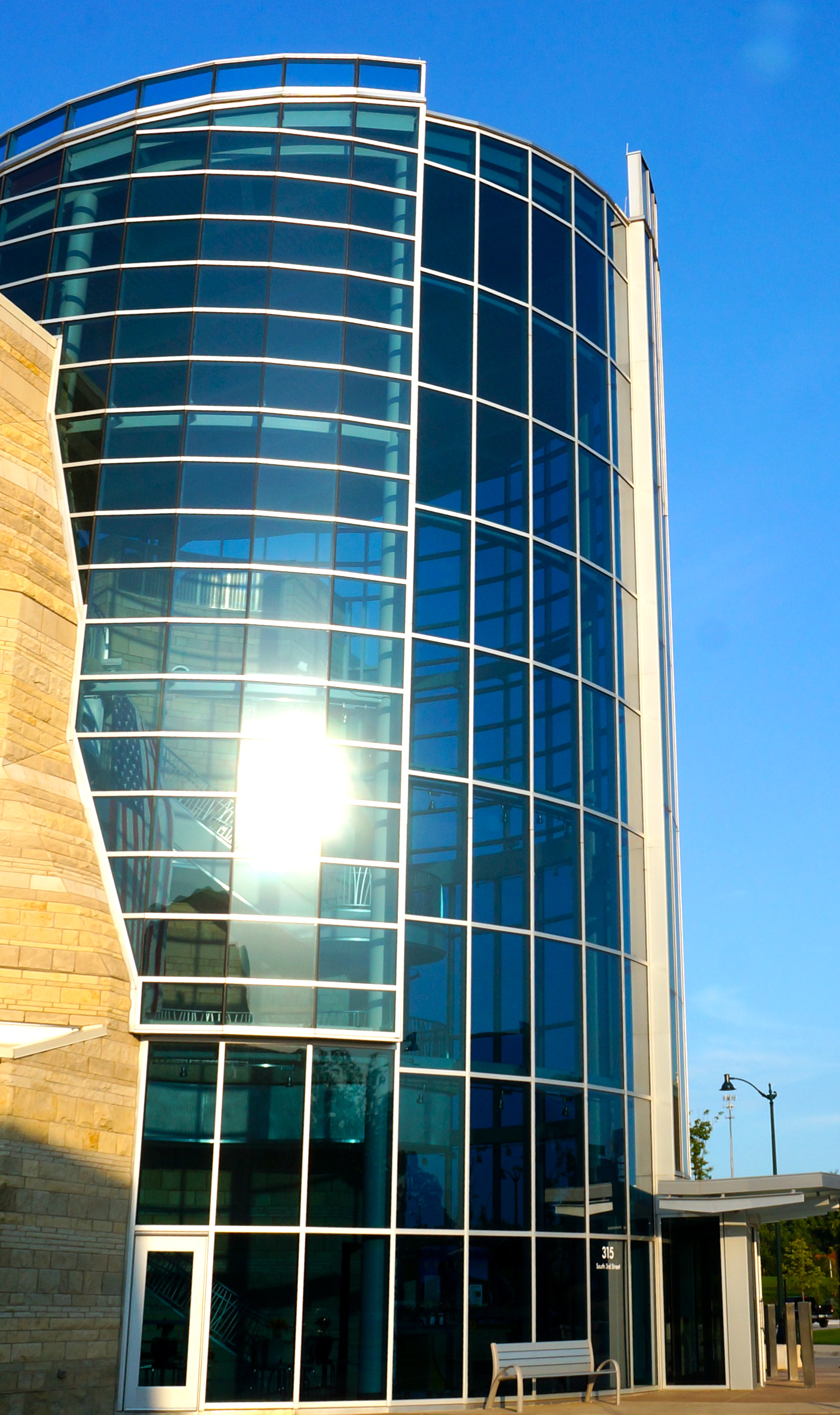
Entrance to the Flint Hills Discovery Center

Entrance to the Flint Hills Discovery Center

This Jim Hoy quote is included in an exhibit at the Flint Hills Discovery Center in southern Manhattan, Kansas, and I couldn’t have expressed it better myself. The subtle beauty and the quietness of the space in the Flint Hills can be difficult to describe.

Having gone to school in Manhattan, coming back to the town to research the bike trails by the river, I figured that I knew all the city had to offer. But the Flint Hills Discovery Center opened in April 2012, and it’s a great place to go and get lost in the history and lure of the Flint Hills for an hour or two, especially for those with kids or who have any interest in Kansas, history, geography, biology, or ecology.

What’s special about the Flint Hills? Once 250 million acres stretching from Canada to Texas, the tallgrass prairie is now 95% gone – plowed under and turned into farmland.

Thanks to the rocky soil, mostly limestone, in the Flint Hills area, the prairie here was saved. This rare and delicately balanced ecosystem is home to all kinds of flora and fauna from grasshoppers to bison and snakes to butterflies.

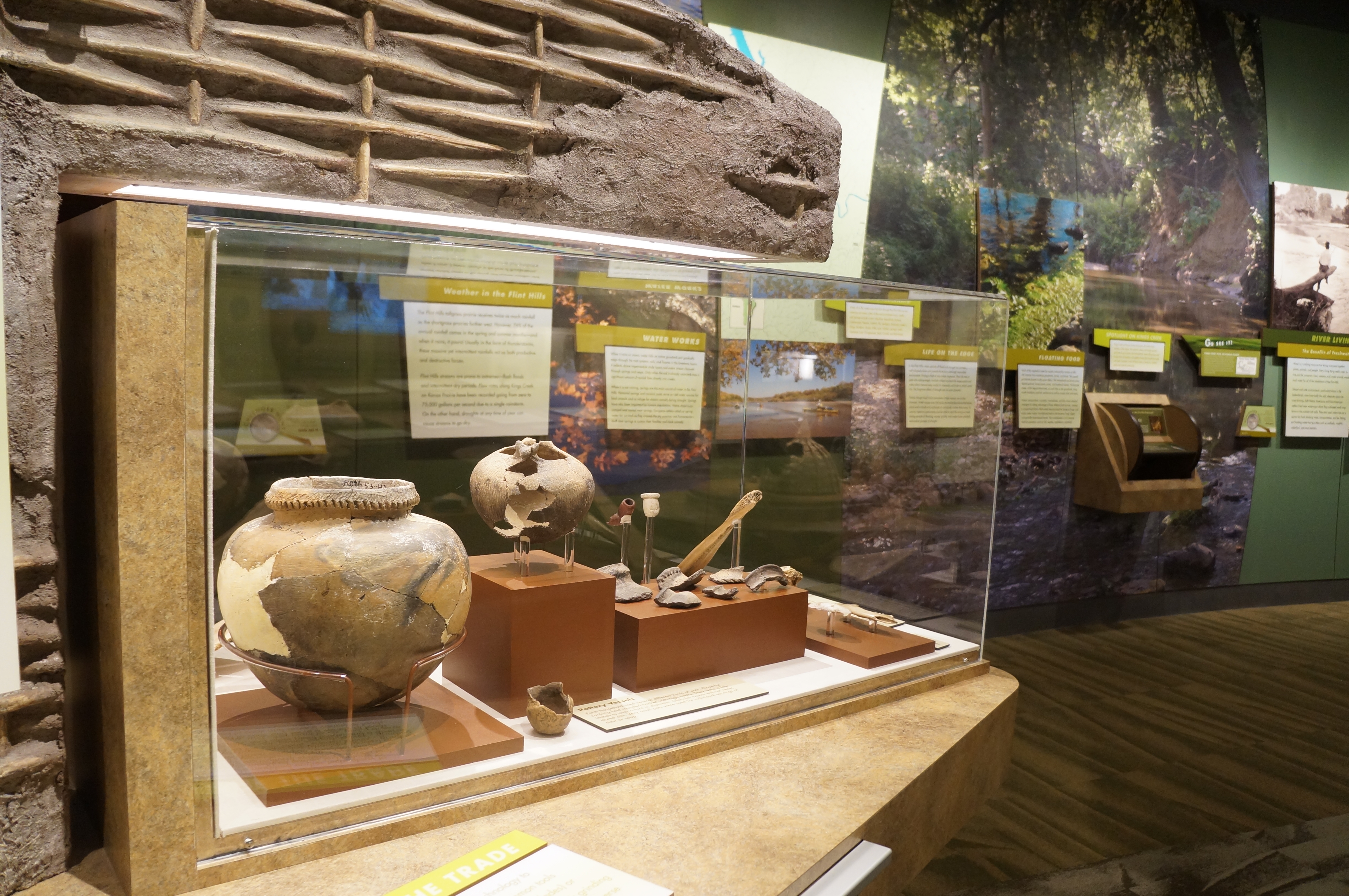
Looking through the first floor exhibits at the Flint Hills Discovery Center, you see the prairie from all angles: formation of the rock layers and the rolling hills over thousands and millions of years, the plants and wildlife that make the prairie what it is – including beneath the soil’s surface, the importance of fire to keeping the prairie healthy, history and culture of the Native Americans who called the prairie home or hunting ground and were then relocated with the European influx, the cowboys and ranchers who have driven cattle to and from the grassland for grazing.

Native American exhibit

Native American exhibit

What stands out is the mix of exhibits like the rolling video of interviews with people of the Flint Hills and the interactive activities. While appealing for kids, they’re also interesting/entertaining for adults – like the Auctioneer’s Karaoke (I couldn’t keep up!).

You can also see how you’d do keeping a section of prairie healthy with a touch screen simulation – balancing the amount of cattle or bison with the number of burns over a 7-year time span with a luck-of-the-draw amount of rain. My first try ended poorly with my bison hungry and with non-native, invasive species encroaching on the prairie. Whoops! I tried it again with better results. I’ll let you see how you do!

Also on the first floor is the auditorium for the multi-media “immersive” program: “Tallgrass Prairie: Tides of Time.” The 15-minute presentation takes you to the prairie throughout its seasons, including blowing wind and falling snow. I’ve never been in a museum presentation quite like it, and I’m sure that it’s a hit with kids who might find other “educational” presentations boring. It’s also got some pretty great cinematography and photography that really show off the prairie at its most beautiful and dynamic.

While much of the downstairs area is kid-friendly, upstairs is primarily the kid’s area, and, bonus, it’s actually ideal for kids of all ages. A lot of museums or centers like this one include activity zones that are better for older kids and leave nothing for younger ones. This has a 30lb and under section where kids can crawl and explore. Then there’s a dress-up area, a reading spot, a “prairie pipe organ” and even a slide.

Flint Hills Discover Center

Flint Hills Discovery Center

Also upstairs is the temporary exhibit space. Until September 8, 2013, the exhibit is Conservation Quest. All about how to save energy, it also has plenty of interactive stations. The building itself is energy efficient and sustainably designed.

To commemorate your visit, there’s a little gift shop with many items made in/from Kansas with a mix of books, jewelry, candles, and toys.

I was lucky to be staying in the Fairfield Inn, which is right next door; otherwise, since I hadn’t heard about this spot before, I might have missed out. Don’t risk making that mistake!

If you go:
315 South 3rd Street
785-587-2726

Adult: $9.00
Youth: $4.00
Military, College Students & Seniors (65+): $7.00
Children under 2: FREE

MEMORIAL DAY TO LABOR DAY
Monday through Thursday: 10 a.m. – 8 p.m.
Friday and Saturday: 10 a.m. – 5 p.m.
Sunday: Noon – 5 p.m.

LABOR DAY TO MEMORIAL DAY
Monday through Wednesday: 10 a.m. – 5 p.m.
Thursday: 10 a.m. – 8 p.m.
Friday and Saturday: 10 a.m. – 5 p.m.
Sunday: Noon – 5 p.m.

Kansas Rail Trails: Interview with Clark Coan

Rail Trails of Kansas

In the 1960s and 1970s, railroad tracks were abandoned across the country, and now, long stretches of former rail tracks have been, or will be, turned into trails.

And in Kansas, the rail-trail conversion and creation process has resulted in over 100 miles of usable trail throughout the state with 100+ either in the concept or project stage. See above for a map of the current and proposed trails.

The longest trail in the state will be the 117 mile Flint Hills Nature Trail, and with a $2.4 million grant, by 2014, it should be completed between Osawatomie to Herington. It will also connect up to the completed and open Prairie Spirit Trail in Ottawa, which runs between Ottawa to Iola and connects to the Southwind Rail Trail, which runs between Iola to Humboldt.

The Flint Hills Nature Trail also links up with the 300+ mile Katy Trail in Missouri via the Indian Creek Streamway Trail and Blue River Trail in the Kansas City area.

Making these trails is a huge undertaking. Planning out the location and getting funding, clearing brush and installing crushed limestone, then maintaining the trail – it’s a big job, and the work is primarily volunteer. One non-profit converting these former railways into trails for foot, bike, and horse traffic, is the Kanza Rail-Trails Conservancy.

Prairie Spirit Trail

On the Prairie Spirit Trail

Former Director of Development at Kanza Rail-Trails Conservancy, Clark Coan agreed to answer a few of our questions about the Kansas rail-trails.

Kansas Trail Guide: When did the rail to trail conversion start in Kansas?

Clark: The Rails-to-Trails Coalition of Kansas began working on railbanking the Landon Trail in 1987.

Kansas Trail Guide: How many volunteer hours does it take to create a rail-trail?

Clark: It depends upon the length of the trail. The longer the trail, the longer it takes. Funding is the main thing which slows up development. Generally, it takes 1,000s of volunteer hours to complete a trail.

Kansas Trail Guide: Is there a trail or part of a trail that’s a personal favorite to walk or ride?

Clark: I guess my favorite right now is riding the Flint Hills Nature Trail from Rantoul to Osawatomie. It has a tree canopy and goes along bluffs towering above the Marias Des Cygnes River.

Kansas Trail Guide: Is there anything that most people don’t realize about the rails-to-trails program in Kansas that they should know about?

Clark: Many Kansans don’t know they exist but they are gradually being discovered. They allow Kansans to have adventures close to home.

Kansas Trail Guide: What is the historical significance of the rail-trails?

Clark: The railroads helped open up the West to settlement. Towns sprung up along railroads and settlers rode the trains to their new homes. The rail lines generally followed historical trails such as the Santa Fe Trail which typically followed Indian trails.

Kansas Trail Guide: What do you feel is the impact of the rail trails on Kansas tourism?

Clark: Tourism from rail-trails can help small towns survive. Trail users need food, gas, lodging and souvenirs. The boost to a small town’s economy may help it stay alive.

DoubleTree by Hilton in Overland Park, Kansas

From the Olathe Prairie Center with its open vistas over the plains to the rocky mountain biking loops through the trees of Shawnee Mission Park, Kansas City, KS is full of trails. And during my time on the trails in the Kansas City area, I stayed a night at the DoubleTree by Hilton in Overland Park.

5 pillows and a cookie? Not a bad night’s stay

“Here’s your chocolate chip cookie,” said the front desk agent as she finished checking me in.

“Thank you,” I replied in wonderment, taking the warm, paper wrapped cookie. I couldn’t remember the last time I’d been welcomed at a hotel with a cookie. I very nearly dropped that cookie when I opened the door to my room. Room? No, that’s not the right word. Suite. Thanks to the Overland Park Convention and Visitor’s Bureau, I got hooked up at the DoubleTree.

Hello beautiful!

The corner room had a separate living area with a couch, easy chair, and small dining area, and a flat screen TV that swiveled so it could be viewed from the couch or the bed.

All of those are nice (as was the mini fridge and the comfortable bed with white linens so you know without a doubt that they’re clean), but it is the little details that stand out and make a hotel more than just a bed for the night. It’s always the little things. Here, it was the separate sections in the wastebaskets for recyclables and trash (love that! Every hotel should have those!) and the Wolfgang Puck coffee maker.

Beyond the room, there was a pool, whirlpool, sauna, and workout room. OK, a lot of hotels have those. But how many hotels have a racquetball court on the premises?

Racquetball – who would have guessed?

Tucked away behind the pool area, two men were working up a sweat in the little room. I silently applauded them for their efforts, and then headed back to my room to lounge around, watching TV from the bed then getting up to watch it from the couch as I took notes on the trails of the day (Olathe Prairie Center – mowed loop options with pleasant picnic area in the middle. Shawnee Mission Park – popular with local bikers and well-maintained and signed).

And wanting to get the full experience of the hotel, and not wanting to put on shoes, I called for room service from the Trofi Restaurant. Pricey, yes, as room service and hotel food tends to be, but it was delivered quickly and was yummy.

With its location near Corporate Woods and its loads of meeting and convention space, it’s popular with business travelers, and for anyone who needs a last minute gift from a trip, there is a small gift shop in the lobby.

So if it comes down to this hotel vs. another similarly priced hotel in the same area, remember, this one will give you a free cookie.

If you go:
From $115
10100 College Boulevard
Overland Park, Kansas, 66210-1462
TEL: 1-913-451-6100 FAX: 1-913-451-0386

Interview with Roger of Tailwind Cyclists in Pittsburg

The rolling hills of southeastern Kansas around Pittsburg are perfect for mountain bike trails. I checked in by email with Roger Lomshek, owner of Tailwind Cyclists, which has you covered for all your cycling & outdoor needs, for his recommendations and thoughts on the Pittsburg area trails.

Kansas Trail Guide: What are the best trails in the Pittsburg area for mountain bikers and why?

Roger: We have three trails that offer a mix of flavors for riders.

The 23rd Street Bike Park is in the middle of town 6 blocks east of Broadway on 23rd ST! The bike park has a mix of roller coaster twisty singletrack with lots of short steep 10 foot tall hills. It also has a dirt jumping track with plans to add a trials riding area and pump track. While some areas are beyond the beginner rider there is almost always an easy detour and you’re never more than a half mile from the road.

One of the features at the 23rd Street Bike Park in Pittsburg

One of the features at the 23rd Street Bike Park in Pittsburg

Wilderness Park is at the far north edge of Pittsburg 1/2 mile west of Hwy 69 on McKay ST. The front half has gravel bike & walking paths that are great for beginner riders and families while the back half is a tangle of singletrack trails in heavily wooded hills.

Farlington Lake (Crawford State Park) is 10 miles north of Girard, KS on Hwy 7 (25 miles northwest from Pittsburg). A paved 6 mile road circles the lake while a nearly 8 mile singletrack trail rolls through the woodland around the lake. The singletrack trail has some very difficult sections and overall I would list it as an intermediate trail that is not for beginners.

Kansas Trail Guide: How many volunteer hours does it take to maintain the trails and how many trails does your shop take care of?

Roger: Tailwind Cyclists and our crew of volunteer trail workers maintains all 3 trail networks in our area totaling about 15 miles of trails. We usually devote at least a weekend every other month to trail maintenance and sometimes smaller half day sessions as needed.

Kansas Trail Guide: Are there areas for beginners and experts?

Roger: All three trails offer challenges for expert riders while the 23rd Street Bike Park and Wilderness Park have some beginner friendly portions.

Kansas Trail Guide: Are there any organized trail rides?

Roger: Tailwind Cyclists hosts a Thursday night mountain bike ride that leaves the shop at 6:30 PM during daylight savings time. We also do occasional road trips to further away trails on weekends. Call the shop at 620-231-2212 for details.

Kansas Trail Guide: What gear can people purchase at your shop?

Roger: We sell a wide variety of cycling accessories plus the bikes themselves and can get camping and outdoor gear as well.

Kansas Trail Guide: What do you think makes the Pittsburg area special for mountain bikers?

Roger: The people who ride! We have a great group of riders that make every trail ride fun.