Your opinion wanted on the Kansas parks

Sundown - February 24, 2010 - Kansas City

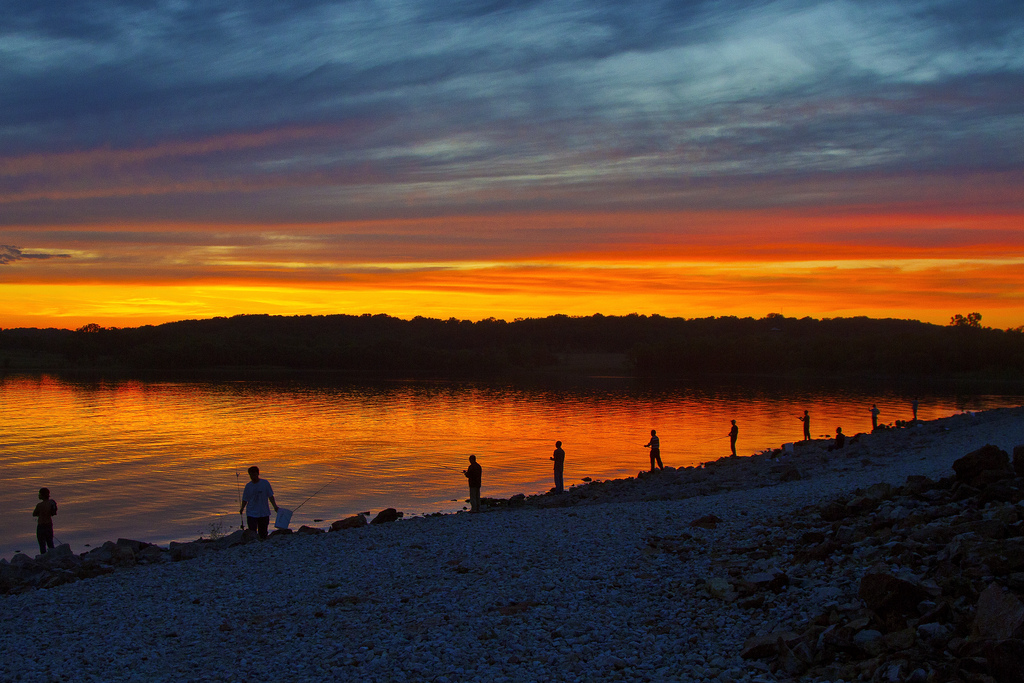
Sundown – February 24, 2010 – Kansas City (Photo credit: CoolValley)


The Kansas Department of Wildlife, Parks, and Tourism is looking for your input on Kansas parks. If you go to http://ksoutdoorrecreation.blogspot.com/, they’re looking for specific comments and there’s also a survey that you can complete.

Four topics will be covered:
  • June 21- July 4 TOPIC:  Which outdoor recreation facilities are most in need of renovation or replacement at state and federal parks in Kansas to best enhance outdoor recreation experiences?  Specific examples are welcomed.
  • July 5 – July 18. TOPIC:  Share a story of a meaningful outdoor recreation experience that you or your family had in Kansas and how the site where that experience took place contributed.
  • July 19 – Aug 1. TOPIC:  Which of the following local outdoor recreation experiences would you like most to be within walking distance of your home (if you live in town)?   Trails/picnic areas/sports venues/natural areas/playgrounds
  • Aug 2 – Aug 15 TOPIC:  Improved access to natural outdoor experiences, particularly those water based, is important for urban dwellers.  Please provide suggestions on how this can best be achieved and examples of success stories.

Your opinions matter and will help shape the direction of the state’s Outdoor Recreation Plan!

4th of July with the Kansas State Parks

It’s been awhile since our last post – we’ve been hard at work out on the trails in this (relatively) balmy weather. We’ve been on the trails in south central and south east Kansas from El Dorado Lake to Cross Timbers State Park.

One of this year's cutest baby contestants enjoying watermelon in 2012

One of this year’s cutest baby contestants enjoying watermelon at the 2012 Old Fashioned 4th of July

But we’re taking a break to celebrate the 4th of July in Sterling with its Old Fashioned 4th of July. From an early morning run, to watching the turtle races, to rooting for our favorite in the cutest baby contest, and, of course, fireworks and lots of yummy food, it’s going to be a great day to relax and recharge to get ready to get back on the trails.

As for Kansas state parks, there’s only one that allows fireworks: Elk City State Park: July 1-4, 6:00 a.m. – 11:00 p.m. Designated area only.

But there are plenty of fun and free events for the 4th at the parks. (If you don’t have an annual park pass, you’ll likely need to get a $5 day pass for any and all vehicles coming into the park.) From the KDWPT website:

7/4/13

Eisenhower State ParkSplash of Color (Tie Dye T-shirts) from 3 to 5pm.

El Dorado State Park – Fireworks Display

Friends of El Dorado Lake – Parade

Friends of Pomona State Park – Free Movie Night/Coffee and Donuts

Pomona State Park – Fireworks Display

7/5/13

Eisenhower State Park – “Wreck-It Ralph” Movie Night

Toronto Point/City of Toronto – Toronto Days

7/6/13

Cross Timbers State ParkToronto Days

Eisenhower State Park – Sand Castle Contest

Glen Elder State Park – Fireworks display

Kanopolis State Park – Fireworks display

Perry State Park – Fireworks display

Wilson State ParkLake Wilson Area Association Poker Run

7/7/13

Toronto Point/City of Toronto – Toronto Days


How are you going to be celebrating the 4th?


Finding and cooking wild Kansas edible mushrooms

We’re in the midst of mushroom season in Kansas, and they’re one of our favorite wild plants on the trail.

If you’re in Lawrence the second Saturday of every month from April to October, you can go out with the Kaw Valley Mycological Society and hunt for mushrooms. The following Wednesday, you can check out what was collected and learn more about the mushrooms of Kansas.

And if you want to head out on your own, here are 5 Kansas mushrooms you can eat with cooking recommendations.

As a disclaimer, mushrooms can be toxic and easily confused with many that look alike, and this should not be used as an authoritative identification guide. Be confident that you know what you have before biting into a wild mushroom. When in doubt, throw it out. Use a field guide, like the one published by University Press of Kansas to help you.

Morel mushroom. Photo by Michael Hodge

Morel mushroom. Photo by Michael Hodge

Morels

One of the most popular and well-known wild mushrooms in Kansas as well as one of the first of the season, morels can be found in wooded areas, particularly near creek beds and dead and dying trees. The surface will be deeply pitted and the inside will be hollow.

To cook: Clean them by soaking them in cool, slightly salty water and rinse them thoroughly.

Then saute in butter or olive oil for about 5-7 minutes. For a gourmet twist on the flavor, saute some minced garlic for a few minutes in the olive oil before adding the mushrooms.

Chanterelle

Chanterelle. Photo by Ole Husby

Chanterelle. Photo by Ole Husby

Frequently found in forests near mature, living trees and growing out of the ground (not from the trees themselves),  these mushrooms are a uniform bright yellow or gold color with wavy tops and smell fruity – a bit like apricots. You can typically find them in Kansas from mid-June to October.

To cook: Popular with gourmet chefs around the world, chanterelles need to be carefully cleaned to remove dirt with a small brush or cloth, using water if necessary. Avoid soaking. Eaten raw, they have a peppery aftertaste and can be used in green salads, but they taste better cooked.

Saute them in butter or oil for a few minutes – they should be lightly browned and still firm and they can then be paired with sauted green beans or with scrambled eggs and chives. They’re also a good topping for grilled chicken and steak.

If you end up with a lot of chanterelles and you can’t cook them up in a few days, you can dry them in the oven (be prepared for a strong smell in the kitchen) overnight on low heat.

Maitake. Photo by Ben Harwood

Maitake. Photo by Ben Harwood

Maitake or Hen of the Woods

Growing along the base of oak trees, these mushrooms are characterized by their overlapping growth. A pale or dark brown on top and white underneath without gills, they have wide, flat fronds and you can find them in Kansas in the late summer and fall.

To cook: Take the time to thoroughly clean the mushrooms, and remove the core of the stem before cooking.

Pan roast them in olive oil for a few minutes after they turn golden brown and then add fresh rosemary and a dab of butter and some salt and pepper and cook for about another minute. Drain off any excess oil before serving them up.

They can be frozen fresh, but don’t thaw them before cooking. Toss them straight into the pan from the freezer.

Oysters

Oyster. Photo by Dominic Alves

Oyster. Photo by Dominic Alves

These white or gray mushrooms grow only on trees, often on elms or willows. It has a broad, fan or oyster shaped cap and firm white flesh. They can smell a bit like anise if harvested from a tree. There are some lookalikes, so be careful. You can find them in Kansas in late October and November.

To cook: Cut off the stem and run them under water quickly to flush out any bugs or dirt in the underside crevices. These mushrooms are ideal in stir fries as they cook quickly.

Cook them in hot sesame or peanut oil with minced garlic and ginger for a few minutes, and then add some chicken broth and soy sauce and simmer for a few more minutes, and then serve over rice.

They can also be dried and stored – they dehydrate quickly. Rehydrate by soaking them in boiling water for 15 minutes.

Black trumpet. Photo by hr.icio

Black trumpet. Photo by hr.icio

Black trumpet

With a funnel like shape, these small gray and black mushrooms can be found in moss and near oak trees and other hardwood trees.  They have a fruity scent, and they are close relatives to chanterelles. Find them in Kansas through summer and early autumn.

To cook: Clean by dunking them several times in cold water and squeezing them dry.

Saute in butter and then serve them with cooked pasta and topped with parmesan cheese and fresh chives.


What are your favorite wild Kansas mushrooms? Share those along with any favorite recipes in the comments below!

Favorite hiking and biking trails around Salina

Salina, Kansas is hosting their annual Smoky Hill River Festival this weekend.  Bonus – along with the art, culture, and food of the festival, the city has some fun trails. Here are our favorites, some of which will be featured in our book.

For a view

Hike up to the top of Indian Rock. Along the Smoky Hill River, the park was named for its location as a Native American battle. The bluff is one of the city’s highest points, and the trails wind through wooded areas and open prairie with more moderate hiking than the surrounding plains.  Watch out for flying frisbees – the park is popular with disc golfers.

For a long(er) workout

Walk, run, or bike from the north end of Bill Burke Park up to the flood control levee south to Magnolia Street and back – round trip 6.2 miles of mostly flat, wide trail.

For families

Lakewood Park has a total of 2.25 miles of easy to walk trail, including a 13 station interpretive nature trail, a butterfly garden, and lots of birds.

Food and fun: Smoky Hill River Festival June 6-9, 2013

Art installation at the 2012 Smoky Hill River Festival. Photo by TravelKS

Art installation at the 2012 Smoky Hill River Festival. Photo by TravelKS

The 37th Smoky Hill River Festival has kicked off with a concert tonight followed by events all day Friday, Saturday, and Sunday.

We lived for six years in Salina, and every year, I was surprised and amazed by the wealth of art, crafts, music, and food. Delicious, delicious fair-style, food-truck food. Funnel cake for breakfast? Don’t mind if I do. Turkey leg as big as my face? Sure!

Art installations are scattered around the park, and there’s a fine art show and demonstrations along with tents with activities for kiddos, like craft making and face painting. One of my favorite memories from River Fest (along with the blur of good food, good friends, and good music) was finding a drawing with my brother that we wanted to get for my dad for his birthday. It was an ink drawing that was reversible – flip it one way and it told one story, the other way and it told another – from despair to hope just on the perspective of the image.

Musician Amanda Barrett of The Ditty Bops perf...

Musician Amanda Barrett of The Ditty Bops performing at the 2007 Smoky Hill River Festival. (Photo credit: Wikipedia)

It was around $50, which for us, as high school students who mowed lawns for cash, was a lot of money. We spotted it on a Sunday, the last day of the festival, and we thought it would be just about the coolest gift we could come up with. Far and above the gifts of stapled together coupon books (1 free hug for Dad. 1 session of washing dishes).

We scraped together the $50 and came running back, hoping that the artist hadn’t sold the painting yet. He hadn’t, but we weren’t yet in the clear. We’d neglected to think through the additional amount for tax. We looked at each other in dismay – we’d lost after all. But the artist (I wish I remembered his name!) took pity on us and waived the tax. The drawing still hangs in our parent’s house today. It was a simple thing, but the kindness of the artist, when he could have just shrugged his shoulders and said sorry, has stayed with me.

Every hour throughout the weekend starting from 10am and running through the evening, there will be music performances, with the main events happening at Eric Stein stage on Friday and Saturday night. Check out the full schedule here.

Food court. Photo by TravelKS

Food court. Photo by TravelKS

Where: Oakdale Park at South Second and Mulberry. Parking and free shuttle service at Bicentennial Center

When: Gates open on Friday, Saturday, and Sunday mornings at 9:30am

Cost: A River Fest button is required, and they’re $15 at the gate if you didn’t get one ahead of time. The button gets you into all 3 days. Kids 11 and under get in FREE!

What’s your favorite River Festival memory? Let us know in the comments!

Review of Garmin eTrex Legend

We’re using Garmin’s eTrex Legend to make the maps for our upcoming Kansas Trails Guidebook.

Why we love it:

  • photoSmall and lightweight at 5.3 oz (150g) and 2.0″ x 4.4″ x 1.2″, it’s easy to slip into a pocket.
  • Waterproof (though doesn’t float)
  • Screen is easy to read, even in bright, direct sunlight
  • Powered by AA batteries, it lasts up to about 16 hours (can depend on temperature and how long it has to search for a signal – can take longer in heavily wooded areas), which should be plenty of time for an overnight trip, though always bring extra batteries
  • Handheld and easy navigation through menus – in fact, the whole thing is designed to be used with just the left hand.
  • Built in base map
  • Easy waypoint setting
  • Navigation between waypoints
  • Sunrise/sunset information, so you know how much daylight you have left!
  • Good price point at $149.99 through Garmin

For us, these aren’t deal breakers, but so you know what it doesn’t have:

  • Gray scale screen, not color
  • 8 mb extra space to add maps, which may not be enough for those wanting to use it to upload larger, more detailed city maps – though for on the trail, that’s not as much of a problem
  • No barometic altimeter
  • May take awhile to pick up a signal if in a wooded area

Play around with it before you head out on the trail with it for the first time so you get a feel for it, and we’ll be including coordinates in our maps and trail guides, so you can always double check to make sure you’re on the right track.

2013 Biking Across Kansas June 8-15

BAK: 8 days and 522 miles

Since 1975, cyclists have hit the roads of Kansas starting in Colorado and riding across the state in Biking Across Kansas. With a different route each year, it “promotes health and wellness through bicycling, the history and beauty of the Kansas, and the warm hospitality of the Kansas towns and people.”

I’m sure the around 800 cyclists and support staff will be quick to dispute the common misconception that Kansas is entirely flat. While not mountain filled, the route presents some hill challenges, particularly in the eastern section of the state. At nights, the cyclists will eat, shower, and sleep at local schools.

If you’re in and around the route, see the map above and the dates below, come out to show your support to the riders!

Friday, June 7 (early start) – Colorado Border to Johnson City : 16

Saturday, June 8 (regular start) – Johnson City to Sublette: 57

Sunday, June 9 – Sublette to Dodge City: 53

Monday, June 10 – Dodge City to Coldwater: 75

Tuesday, June 11 – Coldwater to Anthony: 80

Wednesday, June 12 – Anthony to Arkansas City: 67

Thursday, June 13 – Arkansas City to Sedan: 56

Friday, June 14 – Sedan to Oswego: 83

Saturday, June 15 – Oswego to Galena: 35

Free fishing the first weekend of June

Kansas fishing. Photo by Kansas Poetry (Patrick)

Kansas fishing. Photo by Kansas Poetry (Patrick)

No license required to fish June 1 and 2, 2013

Typically, if you’re between 16 and 74, you have to get a license to legally fish in Kansas. But for the first weekend in June, you can fish for free! Kansas Department of Wildlife, Parks, and Tourism has put together recommended spots to fish throughout the state. With over 10,000 miles of streams, rivers, and creeks, 40 state fishing lakes, and over 200 smaller fishing ponds, there’s plenty of opportunities for fishing.

Konza Prairie annual wildflower walk – Sunday, June 2

Konza Prairie wildflowers

From 6:30 to 9:00pm on Sunday, June 2, the Kansas Native Plant Society will be hosting its annual wildflower walk. Naturalists will take visitors along the Butterfly Hill Trail, which isn’t normally open to the public, and they will point out and identify the wild variety of native wildflowers that can be found in the prairie. Bring bug spray and comfortable walking shoes and, of course, your camera as you learn more about the native plants of Kansas and marvel at the vistas of the Konza Prairie (which will be highlighted in our Kansas Trails guidebook).

Cost: $10 per person. All proceeds go to Konza Environmental Education Program, whose mission is to: “enhance the understanding of the ecology of the tallgrass prairie ecosystem; increase understanding of the process and value of science; and increase public appreciation for the importance of scientific research as a foundation for sound grassland conservation and management.”

Where: Meet at Konza Prairie Biological Station, 100 Konza Prairie Lane

Edible wild plants on the trail

While there is certainly a place for trail mix and beef jerky in your pack, a little bit of culinary adventure and variety can be found growing right alongside most trails in Kansas. With some basic botanical knowledge and common sense there are many plants that will serve as a veritable outdoor pantry for your next time on the trail. While outdoors, I’ve thoroughly enjoyed sampling the following wild plants:

1. Mulberries. Planted and eaten by early settlers and Native Americans, mulberries are one of my favorite wild snacks. The sweet fruits ripen in mid-summer and the juicy purple berries make a terrific snack while on the trail. The berries can also be used for pies and jams, but they’re so good right off the tree that I’ve somehow never managed to bring home enough to preserve.

2. Sandhill plums. Commonly found in thickets throughout tallgrass and mixed-grass prairies of eastern and central Kansas, wild plums are a delight to eat during late summer. When the berries are fully ripe, the slightly tart plum fruits are also a favorite food of many species of wildlife.

Morel Mushrooms

Freshly picked morel mushrooms

3. Morel mushrooms. Morels are a highly sought after delicacy and many “mushroom hunters” scour woodlands of central and eastern Kansas in the early spring in search of the delicious morel. Morels appear around the time that redbuds bloom and are only present for a few weeks in any given area.

The distinctive wrinkled caps of the mushroom and the hollow stalk make them easy to distinguish from other species but they should not be eaten unless you are absolutely sure that they are indeed morels. While the other plants on this list can be eaten raw, these mushrooms should be cooked before consumption. Personally, I’m partial to sauteeing them in a little butter with a hint of garlic.

4. Wild rose. The beautiful wild rose grows state-wide in prairie areas of Kansas. The fruits of the wild rose are known as “rose hips” and are extremely high in Vitamin C. They ripen during August and September and can be eaten raw or made into jelly. The flower petals are also edible and make a tasty addition to a spring salad.

5. Yucca. The sharply pointed leaves of this species make it easy to identify and it is common in many areas of central and western Kansas. There are a variety of parts of the yucca plant that were consumed by Native Americans, including the flower stalk, petals, and the immature fruits. While on the trail, try the distinctive white petals for some interesting eating.

These species are common throughout Kansas and fairly easy to identify, but always make certain that you are 100% certain of the correct identification (especially with mushrooms) before eating any of these plants while on the trail. If these plants leave you wanting even more, look for additional information in Kelly Kindscher’s authoritative guidebook – Edible Wild Plants of the Prairie published by the University Press of Kansas.